

What Wedge Should I Use for Chipping Around the Green?
You’ve done the hard work. A great drive found the fairway, and your approach shot is just a few yards off the putting surface. It should be an easy up-and-down, right? But then the doubt creeps in. Staring at your bag, you face the question that plagues millions of golfers every weekend: what wedge should I use for chipping around the green?
Picking the wrong club can turn a simple chip into a bladed shot over the green or a chunk that goes nowhere. It’s one of the most frustrating parts of golf, but I’m here to tell you it doesn’t have to be. The secret to a killer short game isn’t having one magic wedge; it’s knowing which wedge to use for the specific shot in front of you.
In this guide, we’re going to demystify wedge selection for good. I’ll break down exactly when to use each type of wedge so you can approach every chip with confidence and start saving crucial strokes.
Wedge Selection for Chipping at a Glance
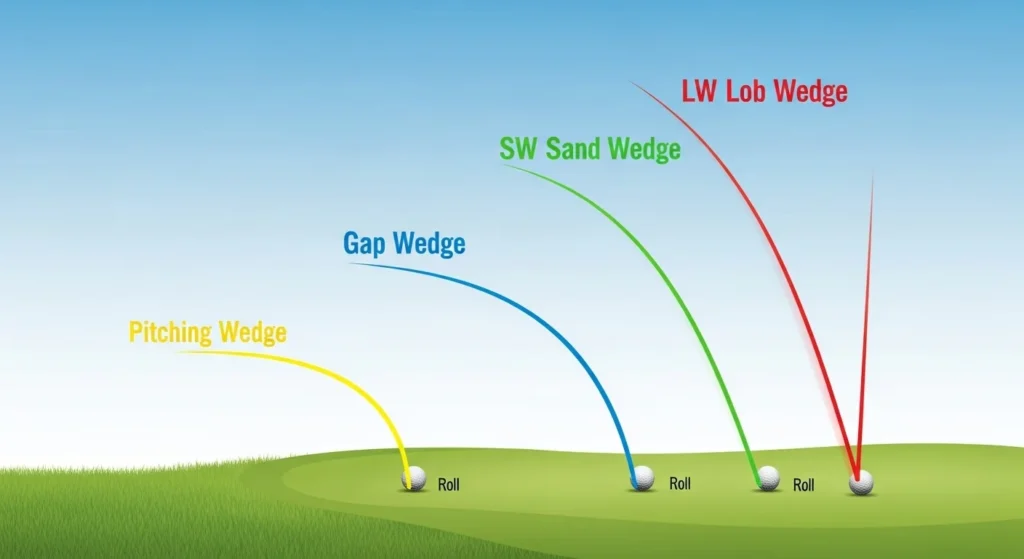
- Pitching Wedge (PW): Use when you have a lot of green between you and the hole. This shot is low-flying with maximum roll, like a putt.
- Gap Wedge (GW/AW): The most versatile option. Use for shots that need a medium trajectory and a moderate amount of roll. It’s the perfect middle-ground club.
- Sand Wedge (SW): Use when you need to carry an obstacle (like a bunker or fringe) and stop the ball fairly quickly. This shot has a higher trajectory and less rollout.
- Lob Wedge (LW): Your specialty tool. Use it when you’re short-sided with very little green to work with and need the ball to fly high and stop almost instantly.
Why Your Wedge Choice is Crucial for Chipping
Many amateur golfers fall into the trap of using their favorite sand wedge for every single chip. While you can get away with it sometimes, this “one-size-fits-all” approach is costing you strokes. Think of your wedges as different tools in a toolbox—you wouldn’t use a hammer to turn a screw.
The goal of chipping is to get the ball onto the green and rolling toward the hole as soon as possible, just like a putt. The two key factors that determine how a ball will react are trajectory (how high it flies) and roll (how far it travels after landing).
Every wedge is designed with a different loft, which is the primary driver of trajectory and roll. By simply changing the club, you can produce drastically different shots without changing your swing.
What Wedge Should I Use for Chipping? A Breakdown by Loft
Let’s dig into the specifics of each wedge. Understanding the job of each club is the first step toward making the right decision on the course.
The Pitching Wedge (PW): Your Go-To for the “Bump and Run”
With a loft of around 44-48 degrees, the pitching wedge is the lowest-lofted wedge in your bag. This makes it the ideal choice for the classic “bump and run” shot.
When to Use a Pitching Wedge for Chipping:
- You have a clean lie in the fairway or first cut of rough.
- There are no obstacles (bunkers, thick rough, sprinkler heads) between you and the green.
- You have plenty of green—at least 20-30 feet—to work with.
The Shot: A chip with a pitching wedge will come out low, land on the green just a few feet from the edge, and release like a putt. In my experience, the less time the ball is in the air, the less can go wrong. If you have a straightforward shot with lots of green, a PW is your safest and most reliable play.
Pro Tip: Try to use your putting stroke rhythm when chipping with a pitching wedge. It keeps the motion simple and your results consistent.
The Gap Wedge (GW) or Approach Wedge (AW): The Versatile Workhorse
Sitting between the pitching wedge and sand wedge, the gap wedge (typically 50-54 degrees) is arguably the most versatile chipping club you own. It offers a fantastic balance of flight and roll.
When to Use a Gap Wedge for Chipping:
- You have a medium amount of green to work with.
- You need to carry the ball a bit further onto the green to clear the fringe or a small patch of rough.
- It’s your standard, everyday chip shot.
The Shot: A chip with a gap wedge flies higher than a PW but lower than a sand wedge. It will land softer and roll out less, giving you more control on medium-length chips. What I’ve found works best is to think of this shot as having roughly equal parts air time and ground time. If I have to carry the ball 15 feet to the green, I can expect about 15 feet of roll.
The Sand Wedge (SW): For More Height and Softer Landings
The sand wedge (54-58 degrees) is the club most golfers default to, and for good reason—it’s incredibly useful. Its higher loft helps you get the ball airborne quickly, making it perfect for shots that require more carry.
When to Use a Sand Wedge for Chipping:
- You need to carry a greenside bunker or a patch of thick rough.
- The pin is cut closer to your side of the green, reducing your landing area.
- The ball is sitting down in moderate rough.
The Shot: The sand wedge produces a high-arcing shot that lands softly and has minimal rollout. This allows you to fly the ball to a specific spot and trust that it won’t run too far past the hole. A 56-degree wedge is the most common loft for a sand wedge and is a staple in most golfers’ bags.
The Lob Wedge (LW): Your High-Risk, High-Reward Tool
With 58-62+ degrees of loft, the lob wedge is a specialty club designed for maximum height and stopping power. It’s the club you see pros use for those incredible, sky-high flop shots.
When to Use a Lob Wedge for Chipping:
- You are “short-sided,” meaning you have very little green between you and the hole.
- You have to hit over a bunker or obstacle to a tight pin.
- The greens are exceptionally fast and you need the ball to stop immediately.
The Shot: This shot flies very high and lands with almost no roll. However, it’s the most difficult wedge to hit consistently. Because of its extreme loft, the margin for error is small. A slight mishit can lead to a chunked shot that goes nowhere or a thin shot that flies across the green. I always tell my students to only use the lob wedge when absolutely necessary.
Reading the Lie: How Course Conditions Dictate Your Wedge Choice
Beyond distance, the way the ball is sitting—its “lie”—is critical in determining what wedge you should use for chipping.
Tight Lies & Firm Fairways
When the ball is sitting on bare dirt or very tightly mown fairway, there’s very little grass underneath it. Using a high-lofted wedge with a lot of bounce here is risky, as the leading edge can easily catch the ground and result in a “skulled” shot.
Recommendation: For tight lies, a lower-lofted club like a pitching wedge or gap wedge is a much safer play. The sharper leading edge helps ensure you make clean contact with the back of the ball.
Fluffy Rough
When the ball is sitting up on a cushion of grass, the challenge is the opposite. You need a club that can glide through the turf without getting stuck or digging in. This is where a club’s “bounce” comes into play. If you’re not familiar with this term, check out our Understanding Golf Wedge Bounce: A Simple Guide.
Recommendation: For fluffy lies, a sand wedge is the perfect tool. Most sand wedges are designed with more bounce, which is the angle on the sole of the club that prevents it from digging into sand or thick grass. It helps the club slide under the ball, popping it up softly onto the green.
For golfers who consistently struggle with digging their chips, especially from fluffy lies, I often recommend a more forgiving, cavity-back style wedge like the Cleveland CBX ZipCore (this is an example affiliate link). Its wider sole is incredibly helpful. For more advanced players seeking maximum control, the Titleist Vokey Design SM9 (this is an example affiliate link) remains the gold standard for its precision and versatility.

A Simple System for Choosing Your Chipping Wedge
Here is a simple, 3-step thought process to use on the course:
- Assess the Lie: Is the ball on a tight lie or in fluffy grass? This will help you narrow down your options (e.g., fluffy lie = sand wedge).
- Analyze the Green: How much green do you have to work with? A lot of green means you can use a lower-lofted club (PW/GW) and let it run. Very little green means you need a higher-lofted club (SW/LW) to stop it quickly.
- Pick Your Landing Spot: Forget the pin for a moment. Instead, identify the ideal spot on the green to land the ball. Once you’ve picked your spot, choose the club that will fly to that spot and then roll out the rest of the way to the hole. The quality of your golf ball will also affect how much the ball checks up. You can learn more in our Guide on Choosing the Right Golf Balls.
Wedge design is a complex science that blends physics and artistry. For those who want to do a deep dive, industry experts like Bob Vokey have perfected the relationship between loft, bounce, and grind. The official Vokey Design wedge website by Titleist is an excellent, high-authority resource for understanding advanced wedge technology.
Frequently Asked Questions (FAQ)
Absolutely! A pitching wedge is an excellent choice for chipping, especially when you have a lot of green to work with. The “bump and run” shot with a PW is one of the most reliable and easy-to-execute shots in the short game.
For most beginners and high-handicap players, a sand wedge (around 56 degrees) with a good amount of bounce and a wide sole is the most forgiving. It helps prevent digging and is versatile enough for most situations around the green.
There’s no set distance. The distance a chip travels depends entirely on the length and speed of your chipping motion, not just the club. A 56-degree wedge is used for its high trajectory and soft landing, making it ideal for chips from 10-30 yards where you need to stop the ball relatively quickly.
It depends on the course conditions and your swing type. Use a high bounce wedge (10-14 degrees) for fluffy rough and soft conditions, or if you have a steep swing. Use a low bounce wedge (4-8 degrees) for firm, tight lies and hardpan, or if you have a shallow, sweeping swing.
Final Thoughts: Choosing the Right Wedge for Chipping
Mastering the short game begins with a simple shift in mindset: stop relying on one wedge and start thinking like a strategist. By learning the unique role of your pitching wedge, gap wedge, sand wedge, and lob wedge, you can turn a confusing situation into a clear decision.
The next time you’re on the course, walk up to your ball and run through the system: assess the lie, analyze the green, and pick your landing spot. You’ll be amazed at how much easier chipping becomes when you have the right tool for the job.
What’s your go-to chipping wedge? Do you have a favorite shot to play around the greens? Share your thoughts in the comments below – I’d love to hear what works for you!