

Driver Loft Explained: What It Means & How to Choose the Right One
Ever stood in a golf shop, stared at a wall of shiny new drivers, and felt your head spin looking at the numbers on the clubface? 9.0°, 10.5°, 12°… it can feel like a complex math problem just to buy a club. If you’ve ever wondered, “What does the loft on a golf driver actually mean?”—you’re in the right place.
For years, I saw players grabbing the lowest loft driver off the rack, thinking it was the secret to hitting massive bombs down the fairway. But in reality, they were costing themselves distance and accuracy. Understanding loft isn’t just technical jargon; it’s one of the most fundamental keys to unlocking your true potential off the tee.
In this guide, we’ll break down everything you need to know about driver loft in simple, easy-to-understand terms. We’ll demystify the numbers, show you how they affect your ball flight, and give you a clear roadmap to finding the perfect loft for your unique swing.
Key Takeaways: Your Quick Guide to Driver Loft
- What is Loft? Driver loft is the angle of the clubface in relation to the shaft. It’s measured in degrees and is the primary factor that determines how high and far your ball flies.
- Higher Loft = Higher Launch: A higher loft (e.g., 10.5° or 12°) helps launch the ball higher with more backspin, which can increase carry distance and forgiveness, especially for slower swing speeds.
- Lower Loft = Lower Launch: A lower loft (e.g., 8° or 9°) produces a lower, more penetrating ball flight with less backspin, which is often preferred by players with very fast swing speeds to maximize roll-out.
- Swing Speed is Key: Your swing speed is the most critical factor in choosing the right loft. Slower swings need more loft to get the ball airborne, while faster swings can handle less loft.
- There is No “Best” Loft: The ideal loft is unique to you. It depends on your swing speed, angle of attack, and desired ball flight.
What Does the Loft on a Golf Driver Actually Mean?
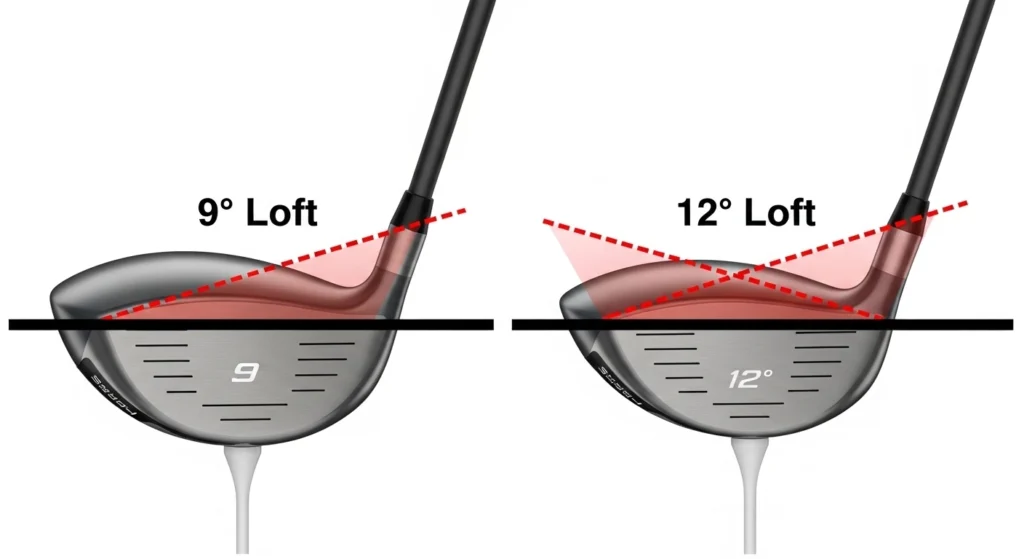
Let’s start with the basics. Driver loft is simply the angle of the clubface relative to a vertical line. Imagine the driver shaft is perfectly straight up and down; the loft is how many degrees the face is angled backward from that line.
This angle is the engine of your launch. When you strike the golf ball, the loft is what lifts it into the air.
- A lower number (like 8°) means the face is more vertical, creating a lower launch.
- A higher number (like 12°) means the face is angled back more, creating a higher launch.
Think of it like a wedge. A sand wedge has a huge loft angle (around 56°), which is why it sends the ball almost straight up. A driver has a much smaller angle because it’s designed to send the ball forward with maximum force and optimal trajectory.
How Driver Loft Impacts Your Ball Flight (Launch & Spin)
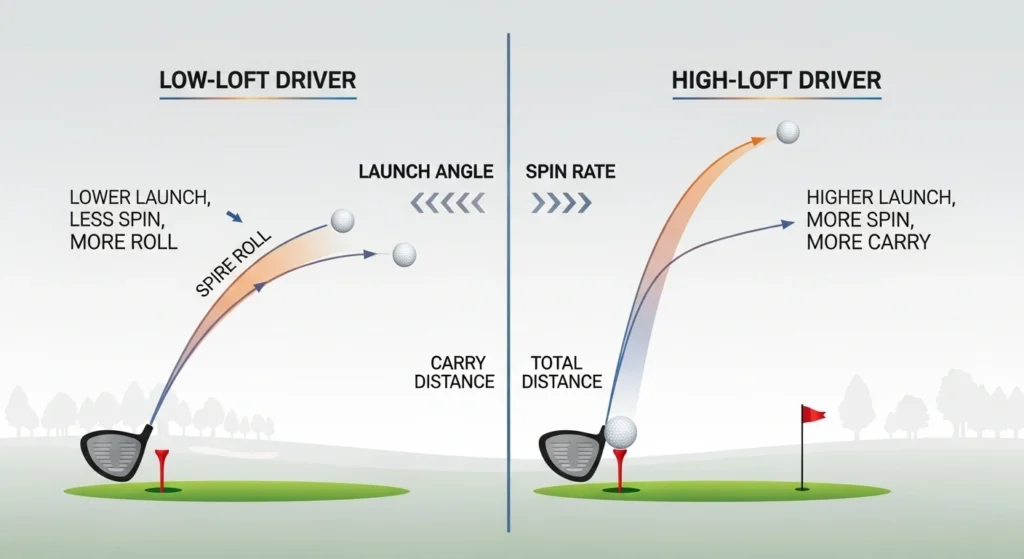
The loft angle doesn’t work in a vacuum. It directly influences two of the most important factors for maximizing distance: launch angle and backspin rate. Getting these two numbers right is the holy grail of driving the golf ball.
The Role of Launch Angle
Launch angle is the vertical angle at which the ball takes off immediately after impact. The loft of your driver is the biggest contributor to this. In my experience coaching, many amateurs believe a low, line-drive trajectory is powerful, but they’re sacrificing massive amounts of carry distance.
For most amateur golfers, the optimal launch angle is somewhere between 12 and 15 degrees. This window allows the ball to stay in the air long enough to achieve its maximum carry distance before it starts to come down. A higher loft makes achieving this launch angle much easier, especially if you don’t have tour-level swing speed.
The Importance of Backspin
Backspin is the spin that makes the ball rise into the air and stay there. It’s a form of aerodynamic lift.
- Too little spin, and the ball will fall out of the sky like a rock, killing your carry distance. This is common with drivers that have too little loft for a player’s swing.
- Too much spin, and the ball will “balloon” upwards, losing forward momentum and getting crushed by wind. This costs you distance and control.
A good target for driver backspin is between 2,000 and 3,000 rpm. Higher lofts naturally generate more backspin. This is why finding the right balance is so crucial—you want enough spin to keep the ball flying but not so much that it balloons.
High Loft vs. Low Loft Drivers: What’s Right for You?
So, how do you know if you need more or less loft? It primarily comes down to your swing speed and how you deliver the club to the ball.
Who Should Use a Low Loft Driver (e.g., 8° – 9.5°)?
A lower loft driver is generally best for golfers with very high swing speeds (105 mph and above).
- Why it works: These players generate enough speed to launch the ball high even with a lower loft. The reduced backspin prevents the ball from ballooning and helps produce a powerful, penetrating flight that maximizes total distance (carry + roll).
- Who it’s for: Typically, skilled amateurs and professionals who have a positive (upward) angle of attack on the ball.
A pro tip: If you’re not sure about your swing speed, you might want to steer clear of sub-9° drivers. Using one without the necessary speed is a common recipe for low, weak shots that dive out of the air.
Who Should Use a High Loft Driver (e.g., 10.5°+)?
A higher loft driver is the best friend of the vast majority of amateur golfers. This includes anyone with an average or slower swing speed (below 105 mph).
- Why it works: The extra loft helps get the ball airborne easily, increasing carry distance. It also generates more backspin, which can help reduce sidespin. This is a key reason why higher lofted drivers are often more forgiving and can help you hit straighter shots. If you struggle with a slice, adding loft can be a huge help. [The Ultimate Guide to Fixing Your Slice]
- Who it’s for: Beginners, seniors, and any player with a swing speed under 105 mph.
From what I’ve seen on the course, a 10.5° driver is a fantastic starting point for most male golfers, while a 12° or even higher loft can be a game-changer for those with slower swings.
Finding Your Perfect Driver Loft: A Step-by-Step Guide
Ready to dial in your number? Here’s how to approach it.
Step 1: Understand Your Swing Speed
This is the most important piece of the puzzle. If you don’t know your swing speed, you’re just guessing.
- Get Measured: The best way is to visit a golf store or a fitter with a launch monitor.
- DIY Estimate: You can use a personal launch monitor or even some golf GPS apps and devices to get a good idea. If you’re serious about dialing in your numbers, a personal launch monitor like the Garmin Approach R10 can be a game-changer for your practice sessions.[Link to: How to Measure Your Golf Swing Speed at Home]
Here’s a general chart to guide you:
- Below 85 mph: 12° to 14° loft
- 85-95 mph: 10.5° to 12° loft
- 95-105 mph: 9.5° to 10.5° loft
- Above 105 mph: 8° to 9.5° loft
Step 2: Consider Your Angle of Attack
Your angle of attack is whether you’re hitting down on the ball (negative), level with it (neutral), or up on it (positive). Hitting up on the ball with a driver is ideal for launching it high with low spin.
- If you hit down on the ball (a common amateur fault), you need more loft to help get the ball into the air.
- If you hit up on the ball, you can use less loft because your swing is already creating launch.
Step 3: Get Fitted (The Gold Standard)
I can’t stress this enough: the absolute best way to find your perfect loft is to get a professional club fitting. A fitter will use a launch monitor like a TrackMan or Foresight GCQuad to analyze your swing and test different lofts and shafts. The data doesn’t lie, and it takes all the guesswork out of the equation.
For those who love data, the folks at TrackMan University have incredible resources that dive deep into the science of ball flight.
The Magic of Adjustable Drivers
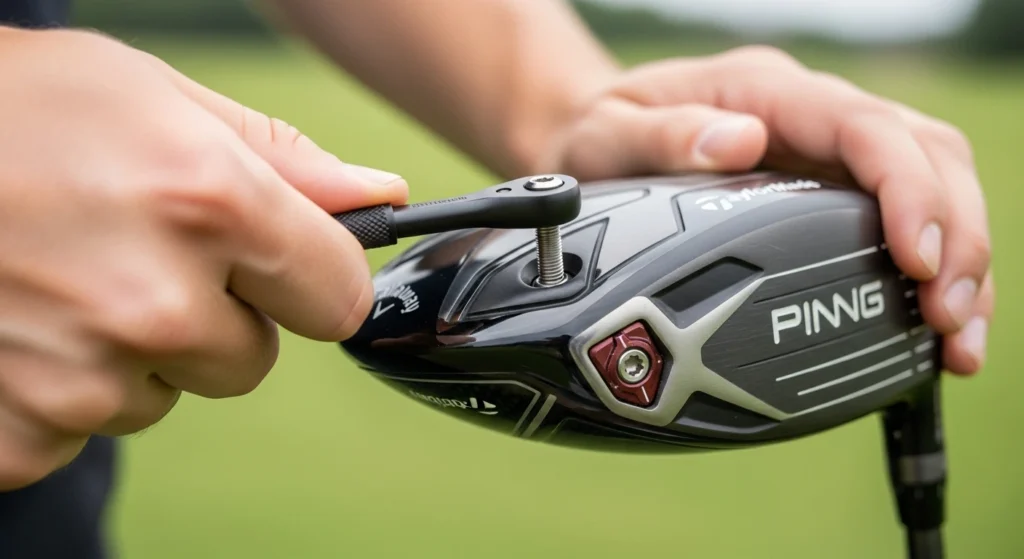
Today, you’re not locked into one loft. Most modern drivers come with an adjustable hosel that allows you to change the loft, typically by +/- 1-2 degrees. This is a fantastic technology that can grow with your game.
For example, a driver advertised as 10.5° might be adjustable down to 9.5° or up to 11.5°. This allows you to fine-tune your launch conditions based on course conditions (e.g., add loft for a windy day) or changes in your swing over time. Many modern adjustable drivers, like the TaylorMade Qi10 Driver, give you the power to fine-tune your loft at a moment’s notice.
If you’re investing in a new driver, I highly recommend getting an adjustable one. Models from top brands like the TaylorMade Qi10 or Callaway Paradym AI Smoke offer incredible flexibility.
Frequently Asked Questions (FAQ)
For male amateur golfers, 10.5 degrees is by far the most popular and often most effective loft. For female amateurs, lofts between 12 and 14 degrees are very common and highly recommended.
Yes, it often does. Higher loft generates more backspin, and backspin’s primary job is to create lift. This high backspin rate can help reduce the effects of sidespin (which causes slices and hooks), leading to straighter ball flights. This is a major reason why it’s so beneficial for most amateurs.
If you have a modern driver with an adjustable hosel, yes! Most drivers come with a small wrench that allows you to loosen the screw in the hosel and rotate the sleeve to a different setting, which will increase or decrease the effective loft. Always check your manufacturer’s instructions before making adjustments.
There’s no exact formula, as it depends entirely on the player’s swing speed and delivery. For a player who needs more loft, going up 1 degree could actually gain them 10-15 yards of carry. Conversely, for a high-speed player, adding 1 degree of loft could cause the ball to balloon and lose distance. The key is to match the loft to your swing to optimize launch and spin.
Putting It All Together: Choosing Your Ideal Driver Loft
Understanding what the loft on a golf driver actually means is a huge step toward smarter equipment choices and better performance off the tee. Remember, it’s not about ego—it’s about physics. Don’t be afraid to “loft up.” Choosing the right loft for your swing will help you launch the ball higher, carry it farther, and find more fairways.
The next time you’re at the range, pay attention to your ball flight. Is it high and powerful, or low and weak? That trajectory is telling you a story about your launch conditions. Listen to it, and you’ll be on your way to longer, straighter drives. And for the ultimate pairing, make sure you’re using the right golf ball for your game.
What loft are you currently playing? Have you ever considered trying a higher or lower lofted driver? Leave a comment below and share your experience!