What Do You Need to Play Golf for the First Time? Your Ultimate Starter Checklist
Stepping into the world of golf is incredibly exciting. The thought of lush green fairways, the satisfying thwack of a well-struck ball, and a relaxing day spent outdoors is a powerful draw. But for many beginners, a simple question can feel overwhelming: what do you need to play golf for the first time?
It’s easy to feel intimidated by the sheer amount of gear you see in pro shops. In my experience helping countless friends get started, the biggest hurdle is simply knowing what’s essential versus what can wait. The good news? You don’t need a tour pro’s bag to enjoy your first round.
This guide will break down everything you need—and everything you don’t—to walk onto the first tee with confidence. We’ll cover the absolute must-haves, what to wear, and some on-course basics to ensure your first experience is fantastic.
Key Takeaways: Your Quick-Start Checklist
Pressed for time? Here’s a quick summary of the absolute essentials you’ll need for your first round of golf:
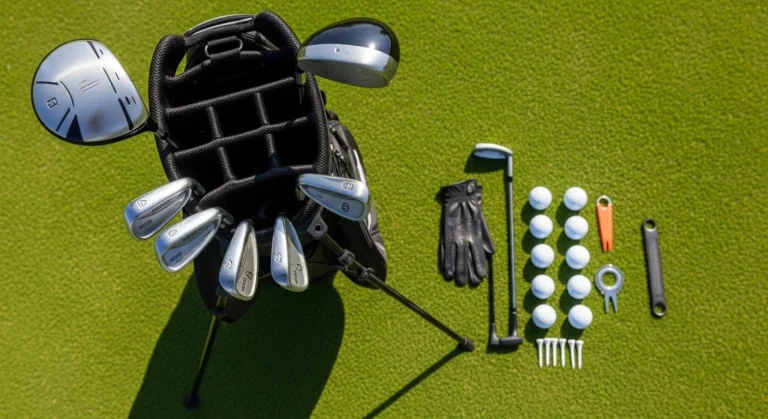
- Golf Clubs: You don’t need a full set. A driver, a putter, a sand wedge, and a couple of irons (like a 6 and an 8-iron) are plenty to start.
- Golf Balls: You’ll lose a few, and that’s okay! Bring at least a dozen budget-friendly balls.
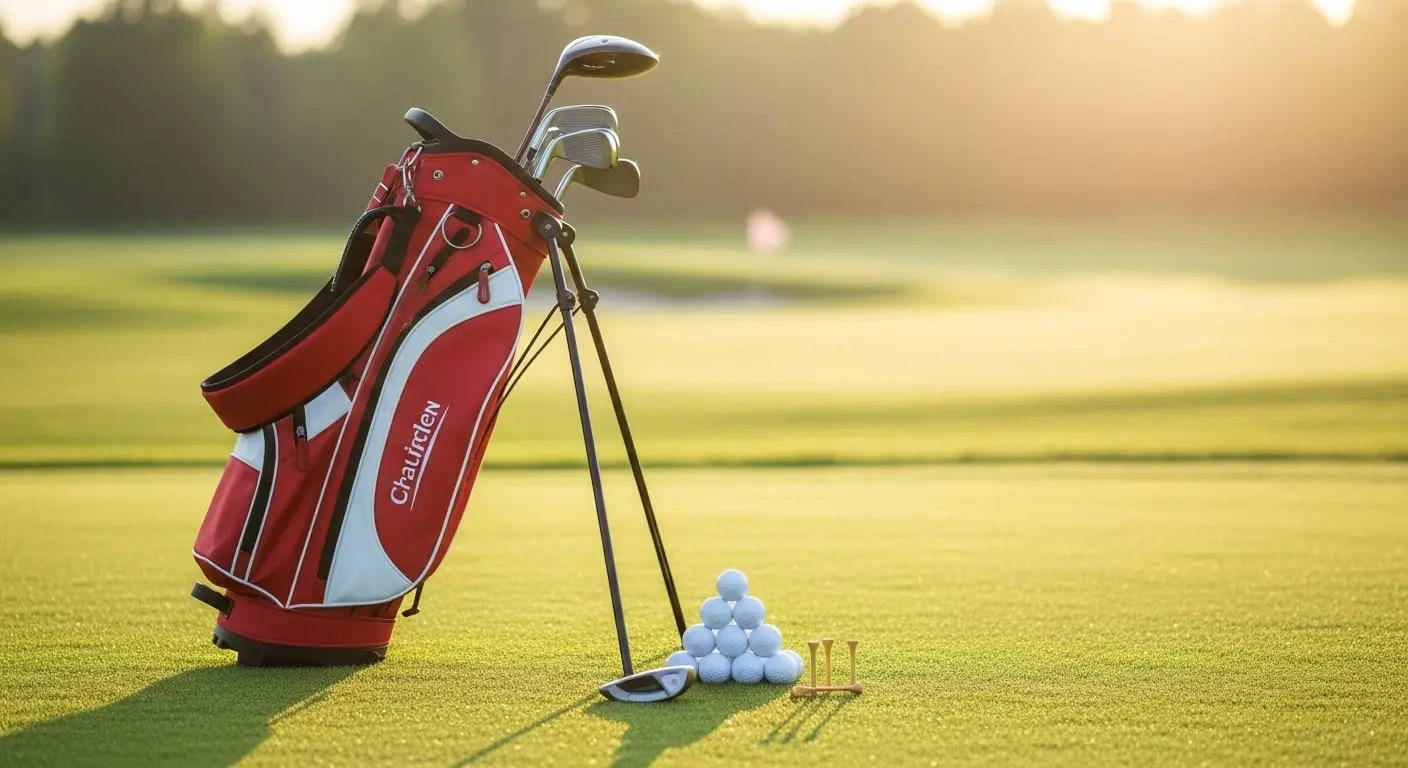
- Golf Bag: You need something to carry your clubs, even a simple, lightweight stand bag will do.
- Tees: A small bag of standard 2.75-inch tees is perfect.
- Appropriate Attire: A collared shirt (polo), comfortable pants or shorts, and proper golf shoes (or athletic sneakers) are standard.
- A Positive Attitude: The most important thing! Your goal is to learn and have fun, not to break the course record.
Essential Golf Equipment: What Do You Need in Your Bag?
Your golf bag is your toolbox for the course. While a professional might carry 14 precisely chosen clubs, a beginner can get by with far fewer. Let’s break down the core equipment you need.
1. Golf Clubs: The Bare Minimum for Beginners
The temptation is to buy a shiny, complete set of 14 clubs. Pro Tip: Resist that urge! A full set is not only expensive but can also be confusing for a newcomer. Too many choices can lead to frustration. What I’ve found works best is starting with a smaller, more manageable “half set.”
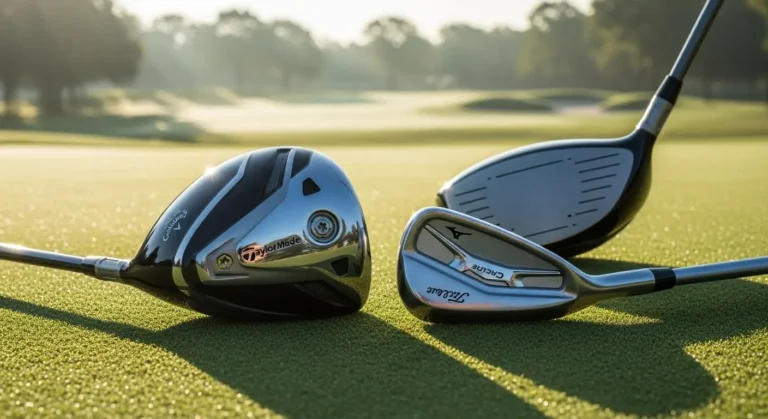
Many brands offer fantastic beginner sets that include all you need. If you’re borrowing or buying individually, focus on these key clubs:
- Putter: This is non-negotiable. You’ll use it on every single hole to roll the ball into the cup on the green.
- Driver (or a 3-Wood): Used for hitting the ball the longest distance from the tee box on longer holes. It can be tricky to hit at first, so a 3-wood is a great, more forgiving alternative.
- Sand Wedge: This club is designed to get your ball out of sand bunkers (traps). Its high loft also makes it perfect for short shots around the green. In my experience, learning to use a wedge early is a huge confidence booster.
- A Mid-Iron (6, 7, or 8-iron): These are your versatile clubs for fairway shots, typically used from 120-160 yards out. A 7-iron is often the easiest to learn with.
- A Short Iron (9-iron or Pitching Wedge): Used for shorter approach shots into the green, generally from 100-120 yards away.
With these 5-6 clubs, you can navigate any golf course successfully while you’re learning the game.

2. Golf Balls: Expect to Lose a Few!
As a beginner, you will lose golf balls. It’s a rite of passage! You’ll hit them into the water, into the woods, or into tall grass where they disappear forever. Don’t add financial stress to the learning process by playing with expensive, brand-new Titleist Pro V1s.
Instead, start with “value” or “refurbished” golf balls. You can buy these in boxes of 12 or in larger mesh bags. They perform perfectly well for a beginner’s swing speed and won’t hurt your wallet when a few go missing. Bring at least 10-12 balls with you for an 18-hole round.
The Callaway Supersoft Golf Balls are an excellent choice for beginners. They are known for their soft feel, straight flight, and durability, all at a very reasonable price point.
3. Golf Bag: Carrying Your Gear
You’ll need a way to carry your clubs, balls, and other accessories. There are two main types of golf bags:
- Stand Bags: These are the most popular choice for beginners as they have retractable legs that pop out when you set the bag down. They are lightweight and easy to carry on your shoulders.
- Cart Bags: These are larger and designed to be strapped to the back of a golf cart. They have more storage but are cumbersome to carry.
For your first time, a simple stand bag is the perfect solution. It gives you the flexibility to walk the course or ride in a cart.
Tees, Ball Markers, and Divot Tools
These small accessories are crucial and often overlooked by first-timers.
- Tees: You need these to prop your ball up on the tee box for your first shot of every hole. A bag of 50 wooden or plastic tees will last you a long time. Standard 2.75-inch tees are a good all-purpose size.
- Ball Marker: When your ball is on the green, you’ll need to mark its spot so you can pick it up to clean it or get it out of another player’s line. A coin works perfectly, but you can also get dedicated, flat ball markers.
- Divot Repair Tool: This is a small, two-pronged tool used to fix the small indentation (a “ball mark” or “divot”) your ball makes when it lands on the green. Fixing your divot is a critical piece of golf etiquette.
What to Wear: Golf Dress Code Basics
Most golf courses have a dress code, so knowing what to wear is essential to feel comfortable and welcomed. You don’t need expensive designer golf apparel; the focus is on a neat, tidy, and athletic look.
Clothing Essentials for the Course
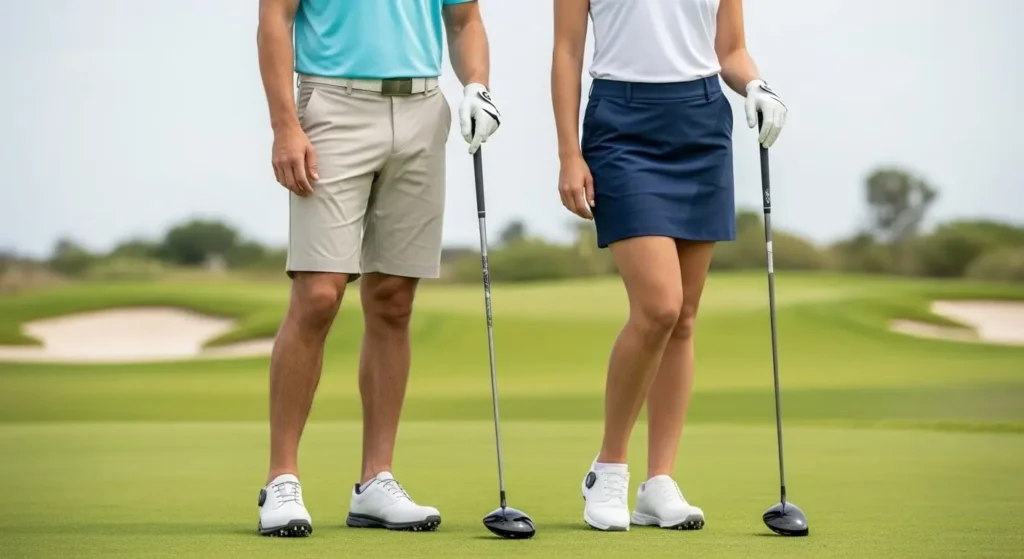
- A Collared Shirt: This is the cornerstone of the golf dress code for both men and women. A simple polo shirt is the standard. T-shirts are almost always prohibited.
- Golf Trousers, Shorts, or Skorts: For bottoms, think “business casual” but athletic. Khaki pants, golf trousers, or tailored shorts are all great options. Avoid jeans, cargo shorts with large pockets, and athletic gym shorts. For women, golf skirts or skorts are also very popular and acceptable.
- Layers: Golf is played outdoors, and the weather can change. A lightweight pullover, sweater, or windbreaker is a great idea to have in your bag just in case it gets chilly or starts to drizzle.
Check out our complete A Guide on What to Wear Golfing (For Men and Women)
Footwear: Golf Shoes or Sneakers?
Proper footwear is key for comfort and performance. Your feet will be doing a lot of walking and rotating during the swing.
- Golf Shoes: These are specifically designed with spikes (plastic nubs, not metal anymore) on the sole to give you better grip and stability during your swing. In my experience, investing in a comfortable pair of spikeless golf shoes is one of the best upgrades a beginner can make. They often look just like stylish sneakers but provide that crucial on-course traction.
- Athletic Sneakers: If you’re not ready to buy golf shoes, a pair of comfortable running or athletic shoes will work just fine for your first few rounds. Just make sure they have decent tread. Avoid wearing sandals, boots, or dress shoes.
Don’t Forget a Golf Glove!
A golf glove is worn on your non-dominant hand (a right-handed player wears it on their left hand). It’s not just for looks; it provides a much better grip on the club, prevents blisters, and helps reduce grip pressure. This is a small accessory that makes a huge difference in control.
The FootJoy WeatherSof Golf Glove is one of the best-selling gloves of all time for a reason. It’s durable, comfortable in all weather conditions, and provides a fantastic grip at an affordable price.
Beyond the Essentials: Optional but Helpful Items
Once you have the core equipment covered, a few other items can make your first day on the course much more enjoyable.
- A Towel: A small towel clipped to your bag is incredibly useful for cleaning your clubs and golf balls.
- Sun Protection: You’ll be in the sun for 4-5 hours. Sunscreen, a hat, and sunglasses are absolute must-haves for protection.
- Snacks and Water: Most courses have snack bars, but it’s always a good idea to bring your own bottle of water and a granola bar or some nuts to keep your energy up.
- A Rules of Golf App: Don’t worry about knowing all the rules at first. But having a simple app like the one from the USGA Official Rules of Golf App can be helpful if a question comes up.
What to Expect at the Golf Course
Knowing what you need is half the battle; knowing what to do when you get there is the other half.
- Booking a Tee Time: You can’t just show up and play. You need to call the course in advance or book online to reserve a specific start time, known as a “tee time.”
- Checking In: Arrive at least 20-30 minutes before your tee time. Go into the pro shop to check in and pay for your “green fees” (the cost to play the course). This is also where you can rent a golf cart if you choose.
- Pace of Play: A round of 18 holes typically takes about 4 to 4.5 hours. The key is to keep up with the group in front of you. Don’t rush your shots, but be ready to hit when it’s your turn. If you’re playing slowly and there’s a gap opening up, it’s polite to let a faster group play through.
- Basic Etiquette: Golf has a rich tradition of etiquette, which is all about respect for the course and for other players. For your first time, focus on these three things: be safe (don’t swing when someone is near), be quiet when others are hitting, and take care of the course by fixing your divots.
Don’t forget to review our A Beginner’s Guide to Golf Etiquette: Basic Rules Every New Player Should Know
Frequently Asked Questions (FAQ)
Absolutely! Nearly all public golf courses offer rental sets. This is a fantastic, low-cost way to try the game before you invest in your own equipment. Just call the pro shop when you book your tee time to reserve a set.
The official rules of golf allow a maximum of 14 clubs. However, as a beginner, you will be perfectly fine with a half set of 6-8 clubs. Don’t feel pressured to have the maximum.
While you don’t need lessons to play your first round, I highly recommend them. A lesson from a PGA professional is the fastest way to learn the fundamentals of the grip, stance, and swing. It will help you build good habits from day one and make the game much more enjoyable.
A driving range is a practice facility where you hit balls from stationary mats or grass into an open field. A golf course is where the game is played, consisting of 9 or 18 unique holes, each with a tee box, fairway, green, and various hazards. It’s a great idea to visit a driving range a few times before your first round on a course.
Your Next Shot: Stepping Onto the First Tee

The journey into golf starts with a single step, and now you know exactly what you need to play golf for the first time. It’s not about having the most expensive gear; it’s about having the right essentials to get you started on the right foot.
Focus on the must-haves: a few clubs, some balls, and the right attire. But most importantly, bring a sense of adventure and a willingness to learn. Your first round is about the experience—enjoying the walk, laughing at the bad shots, and celebrating the good ones.
Now that you’re prepared, it’s time to book that first tee time.
Have you played your first round of golf yet? What’s one piece of advice you’d give to a total beginner? Share your thoughts in the comments below!