
The Ultimate Guide to Understanding Bounce and Loft on a Golf Wedge
Ever felt completely lost when looking at a wall of shiny new wedges? You see numbers like 52, 56, and 60 for loft, and then more numbers like 8, 10, and 12 for bounce. It’s enough to make your head spin.
But here’s the secret the pros know: understanding bounce and loft on a golf wedge isn’t just technical jargon—it’s the key to unlocking incredible control around the greens.
In my years of playing and coaching, I’ve seen countless golfers struggle with their short game simply because they’re using the wrong tool for the job. They chunk shots from fluffy lies or blade them across the green from tight turf. Sound familiar? Don’t worry, we’re about to fix that for good. This guide will turn you into the most knowledgeable player in your group when it comes to your wedges.
A Quick Guide to Wedge Bounce and Loft
- Loft is for Distance: Loft is the angle of the clubface relative to the shaft. Higher loft means a higher, shorter shot (like for flops). Lower loft produces a lower, longer shot (like for bump-and-runs).
- Loft is for Distance: Loft is the angle of the clubface relative to the shaft. Higher loft means a higher, shorter shot (like for flops). Lower loft produces a lower, longer shot (like for bump-and-runs).
- Bounce is for Forgiveness: Bounce is the angle of the sole of the wedge (the part that hits the ground). It prevents the leading edge from digging into the turf or sand. Think of it as your club’s “get-out-of-jail-free” card.
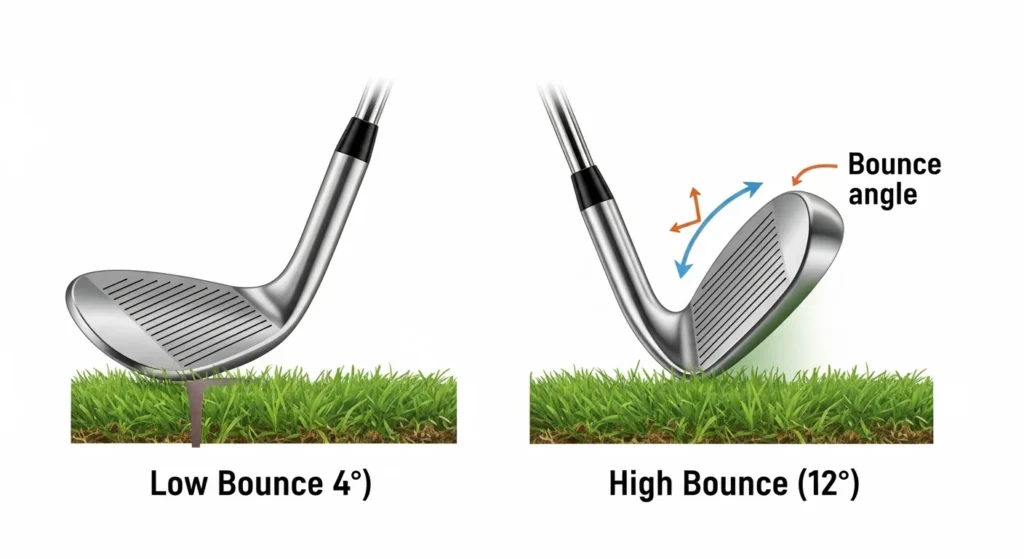
- High Bounce (10°+): Your best friend in soft sand, deep rough, and for golfers with a steep swing. It “bounces” through the turf.
- Low Bounce (4°-8°): Ideal for firm turf, hardpan lies, and players who sweep the ball. It allows for crisp contact without skipping.
- Matching is Key: The goal is to match your wedge’s bounce and loft to your typical course conditions and your unique swing style.
What is Wedge Loft and Why Does It Matter?
Let’s start with the more straightforward of the two: loft.
Simply put, the loft of a golf wedge is the angle of the clubface in relation to the vertical shaft. This angle is what determines the trajectory and distance of your shot. It’s measured in degrees, and it’s usually the biggest number stamped on the clubhead.
In my experience, many amateurs focus only on loft when buying a wedge, but they don’t always understand how different lofts create specific shots.
The Four Main Types of Wedges by Loft
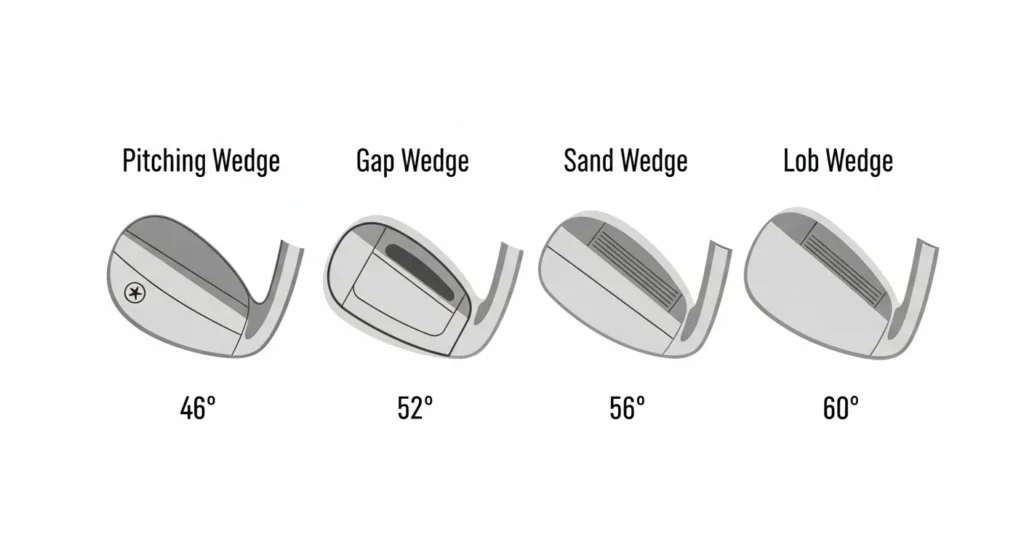
- Pitching Wedge (PW) – 44° to 48° Loft: This is the lowest-lofted wedge and typically comes with your iron set. It’s a versatile club used for full shots into the green, long chips, and bump-and-runs. It produces more roll-out than other wedges. The most common loft for a modern pitching wedge is around 45° or 46°, but it varies depending on the iron set it comes with.
- Gap Wedge (GW) or Approach Wedge (AW) – 50° to 54° Loft: This wedge “fills the gap” in distance between your pitching wedge and sand wedge. If you have a big 20-25 yard difference between those two clubs, a gap wedge is a game-changer for full shots. The 52° is the most commonly used loft for a gap wedge.
- Sand Wedge (SW) – 54° to 58° Loft: The workhorse of the short game. Originally designed for bunker shots (hence the name), its high loft and typically high bounce make it perfect for getting out of sand, navigating thick rough, and hitting high, soft shots that stop quickly. By far, the 56° is the most common and classic sand wedge loft. My 56° is the club I trust most inside 90 yards.
- Lob Wedge (LW) – 58° to 64° Loft: This is your specialty club for the highest, softest shots. Think flop shots over a bunker to a tight pin. It requires skill, but when you master a lob wedge, it feels like a superpower. The 60° is the most popular lob wedge, while higher lofts like a 64° are typically used by more advanced players.
Pro Tip: Don’t just guess your wedge distances. Take them to the driving range and hit 10 balls with each. Find your average carry distance for a full, three-quarter, and half swing. Write these numbers down—it’s invaluable on-course knowledge.
Understanding Bounce on a Golf Wedge: Your Secret Weapon
Now for the real magic: bounce. This is the element that truly separates a well-designed wedge from a basic one, and it’s the most misunderstood concept among amateur golfers.
The bounce angle is the angle between the leading edge of the wedge and the lowest point of its sole. The higher the degree of bounce, the more the leading edge is lifted off the ground at address.
Imagine a boat moving through water. The curved hull allows it to glide on top of the water instead of digging in and sinking. Bounce on a wedge works the exact same way—it helps the club glide through the turf or sand rather than digging in.
How Bounce Affects Your Shots
- Prevents Digging: This is the primary job of bounce. On a steep swing, a high-bounce wedge will hit the turf and “bounce” upward, guiding the clubface directly to the ball for solid contact. This is what makes it so effective in soft sand.
- Prevents Digging: This is the primary job of bounce. On a steep swing, a high-bounce wedge will hit the turf and “bounce” upward, guiding the clubface directly to the ball for solid contact. This is what makes it so effective in soft sand.
- Improves Forgiveness: Because it prevents the leading edge from getting stuck, bounce gives you a much larger margin for error. You can hit slightly behind the ball and still get a decent result.
- Controls Trajectory: While loft is the main factor, bounce has a subtle effect. For example, on a firm lie, too much bounce can cause the club to skip off the turf, leading to a thin, bladed shot.
Choosing the Right Bounce: Three Key Scenarios
So, how do you know if you need low, mid, or high bounce? It comes down to two things: your swing and your course.
- High Bounce Wedges (10° to 14°)
- Best For: Soft course conditions (lush fairways, deep rough) and fluffy sand.
- Player Type: Golfers who have a steep “digger” or “chopper” swing and take deep divots. This is you if your divots look like you’re excavating for gold.
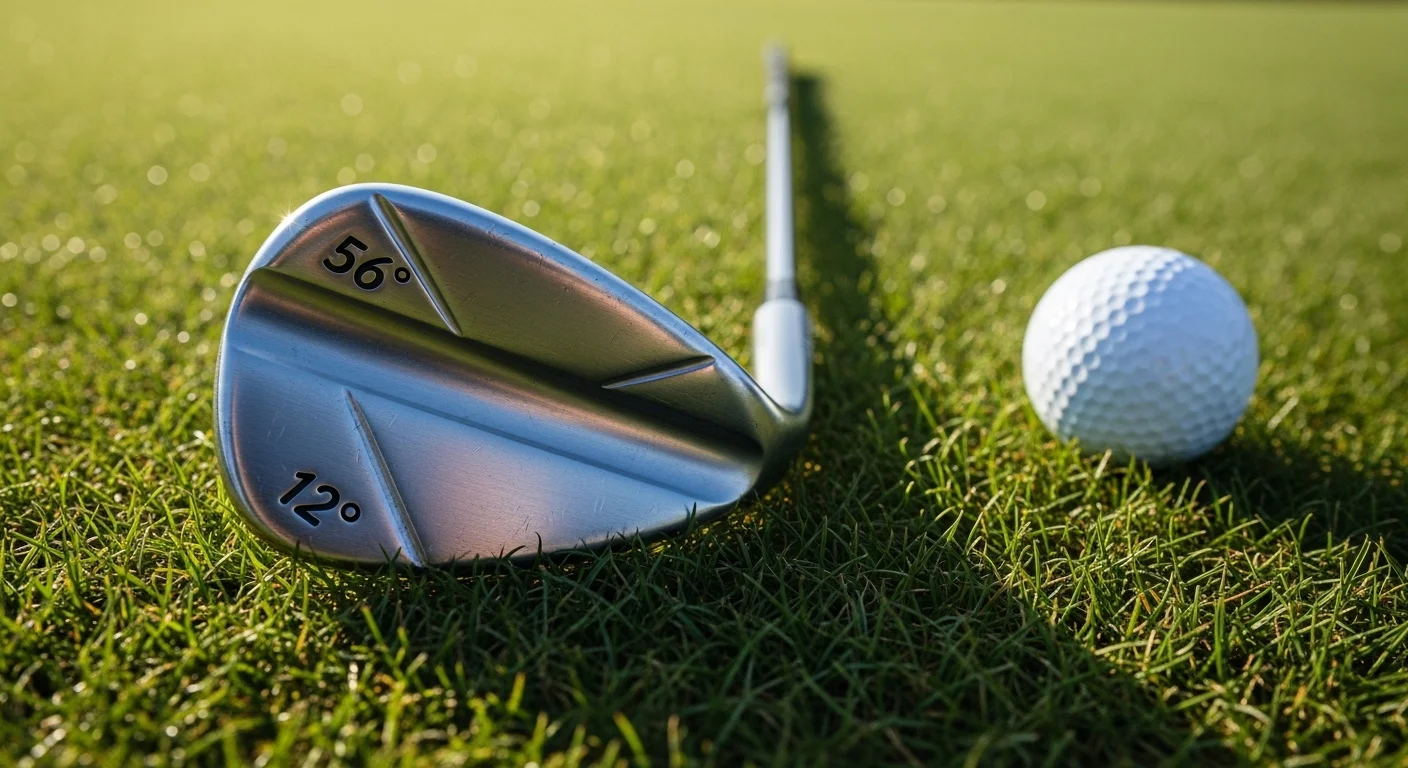
- In my experience, a high-bounce sand wedge (like a 56° with 12° of bounce) is the most versatile club for the average golfer, as it provides maximum forgiveness from the trickiest lies.
Mid Bounce Wedges (8° to 10°)
- Best For: All-around versatility. Good for a mix of normal to soft conditions.
- Player Type: Golfers with a neutral angle of attack. They take a moderate, bacon-strip divot.
- Pro Tip: If you only have room for one or two wedges, a mid-bounce option is a safe and effective bet.
Low Bounce Wedges (4° to 8°)
- Best For: Firm, tight lies (hardpan, thin fairways) and coarse, firm sand.
- Player Type: Golfers with a shallow, “sweeper” swing who take very little divot. This is also for the player who likes to open the clubface wide for creative flop shots.
- A Word of Caution: Low bounce wedges are less forgiving for diggers. If you have a steep swing, this club might become your worst enemy.
Putting It All Together: Matching Bounce and Loft to Your Game
The ultimate goal is to build a set of wedges with the right combination of bounce and loft to handle any situation. You don’t want three wedges that all have high bounce, as you’ll struggle on firm turf.
Here’s a sample wedge setup I often recommend for an average amateur:
- Pitching Wedge: The one from your iron set (e.g., 46° loft, likely mid-bounce).
- Gap Wedge: 52° loft with 8° or 10° of bounce. Perfect for full shots and controlled chips.
- Sand Wedge: 56° loft with 12° of bounce. Your go-to club for bunkers, thick rough, and most shots around the green.
- Lob Wedge: 60° loft with 8° of bounce. A lower bounce allows you to open the face and slide it under the ball for delicate flop shots from tight lies.
This setup gives you consistent 4° gaps in loft and a variety of bounce options for maximum versatility.
If you’re looking for wedges with clearly defined bounce and loft options, the Titleist Vokey SM9 Wedges are the gold standard. They offer a huge range of combinations to fit any golfer. Another fantastic option is the Callaway Jaws Raw Wedge, known for its incredible spin and feel.
Frequently Asked Questions
10 degrees is generally considered a mid-bounce option. It’s incredibly versatile and a great starting point for most golfers. Wedges with 12° or more are high bounce, while those with 8° or less are low bounce.
It depends on the lie. For fluffy lies around the green, a mid or high bounce (10°-12°) will prevent digging. For tight, firm lies, a low bounce (6°-8°) is better as it helps the leading edge get under the ball without skipping.
Tour pros carry a mix of bounce options in their bags and often switch them out based on the course conditions for that week. However, many pros, like short-game wizard Phil Mickelson, often favor low-bounce lob wedges because it allows them to be more creative by opening the face. You can see exactly what the pros are playing each week by checking out in-depth resources like the PGA Tour Equipment Reports.
Look at your divots with your irons. Are they deep and rectangular? You’re a digger with a steep swing and will benefit from more bounce. Are your divots thin and barely scrape the grass? You’re a sweeper with a shallow swing and should lean toward low or mid bounce.
Mastering Your Short Game: Final Thoughts on Bounce and Loft
Understanding bounce and loft on a golf wedge isn’t about getting lost in technical details. It’s about empowering yourself with knowledge to choose the right tools and hit better shots.
Stop blaming yourself for chunky or thin chips—it might just be that your wedge isn’t suited for the shot you’re trying to hit. Take a look at your current wedges. Find out their bounce and loft. Think about your home course and your swing type.
The next time you’re practicing, pay attention to how your wedge interacts with the turf. And when you’re ready to buy a new one, you’ll be able to walk into the shop with the confidence of a pro.
For your next read, check out our guide on How to Choose the Right Putter for Your Stroke.
. A great short game requires mastery of every club! You might also want to perfect your grip after this with our Step−by−Step Guide to the Perfect Golf Grip.
.
Now I want to hear from you! What’s the wedge combination you have in your bag right now? Leave a comment below and let’s talk about how you can optimize it.