
Should a Beginner Use a Driver with More or Less Flex? The Pro’s Guide
Hitting a booming drive straight down the fairway is one of the best feelings in golf. But for many beginners, the driver can be the most frustrating club in the bag, leading to wild slices and disappointing distance. You’ve likely heard golfers talking about “shaft flex,” but what does it actually mean? And more importantly, should a beginner use a driver with more or less flex?
The answer might surprise you. It’s not about being a “beginner” versus an “expert”—it’s almost entirely about your swing speed. Spoiler alert: most beginners will hit the ball longer, straighter, and more consistently by using a driver with more flex.
In my experience coaching hundreds of new golfers, choosing a shaft that’s too stiff is the single most common equipment mistake they make. Let’s dive deep into why that is and how you can find the perfect flex for your game.
Driver Flex for Beginners: The Short Answer
- The Simple Answer: Most beginners should use a driver with MORE flex, which means a “Regular” or “Senior” flex shaft.
- It’s About Swing Speed: Shaft flex should match how fast you swing, not your skill level. Beginners typically have slower swing speeds (under 95 mph), which benefit from a more flexible shaft.
- Too Stiff is a Slice Machine: Using a shaft that’s too stiff for your swing will likely cause you to hit low, weak shots to the right (a slice).
- The Goal of Flex: The right flex helps the shaft “kick” at impact, adding speed, height, and helping you square the clubface for a straighter shot.
What Exactly is Driver Shaft Flex? (And Why It Matters)
Think of the golf shaft as the engine of your club. Shaft flex is simply a rating of how much the shaft will bend or “flex” during your swing. When you swing the driver, the forces you create cause the shaft to bend backwards on the downswing and then “kick” forward right at impact, much like a whip.
This “kick” is crucial. A correctly matched shaft flex does three amazing things:
- Increases Clubhead Speed: It adds a little extra “oomph” right at impact, helping you generate more distance.
- Optimizes Launch: It helps get the ball airborne with the right amount of spin, maximizing carry distance.
- Squares the Clubface: This is the big one for beginners. The kick helps the clubface rotate back to a square position at impact. A square face means a straight shot.
This is why a shaft that is too stiff—one that doesn’t bend enough for your swing speed—robs you of power and often leaves the clubface open, resulting in that dreaded slice.
Should a Beginner Use a Driver with More Flex? Yes, Here’s Why.
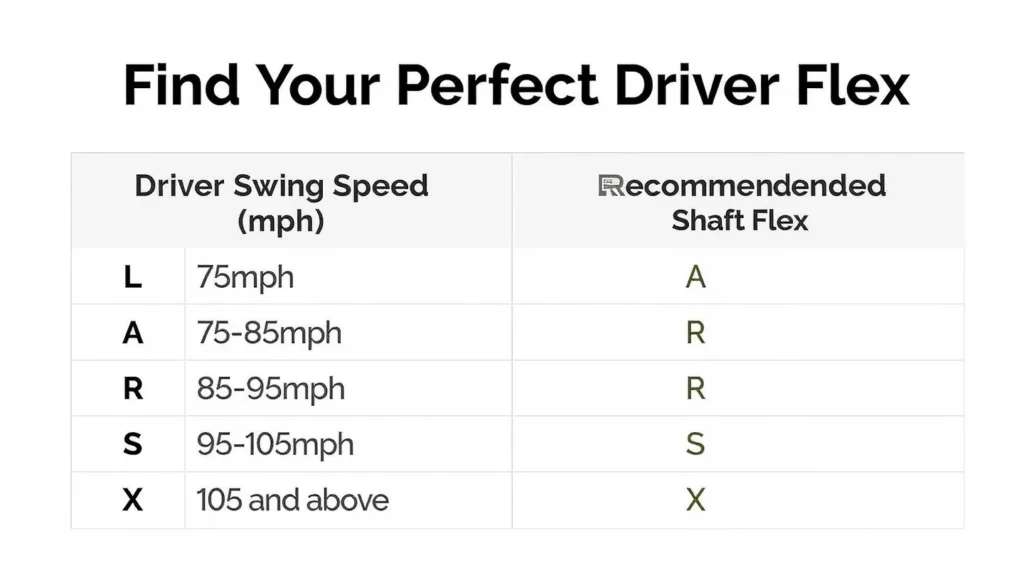
So, we’ve established that for most beginners, the answer is a resounding yes. You should use a driver with more flex. Let’s break down the typical flex ratings you’ll see on a golf shaft and match them to swing speeds.
Most manufacturers use a simple letter system:
- L (Ladies): The most flexible shaft, designed for swing speeds typically under 75 mph.
- A (Senior/Lite): The second most flexible. Don’t let the name fool you; this is an excellent choice for many beginners, seniors, or any golfer with a very smooth tempo and a swing speed between 75-85 mph.
- R (Regular): The most common shaft flex and the perfect starting point for the majority of male beginners. It’s designed for swing speeds between 85-95 mph.
- S (Stiff): A stiffer shaft for stronger, faster-swinging golfers. This is for players with swing speeds from 95-105 mph. Using this as a beginner is a common mistake.
- X (Extra Stiff): The stiffest option, used by highly advanced amateurs and professionals with swing speeds of 105 mph and above.
In my years on the lesson tee, I’ve found that about 80% of new male golfers fit perfectly into a Regular flex shaft. The other 20% are often better suited for a Senior flex, especially if they struggle to get the ball in the air.
Pro Tip: How to Estimate Your Swing Speed
Don’t know your swing speed? Don’t worry! While getting measured on a launch monitor at a golf store is the best way, you can get a surprisingly good estimate.
A great rule of thumb is to use your 7-iron distance. How far do you carry the ball in the air with a well-struck 7-iron?
- Less than 120 yards: You’re likely in the Senior (A) or even Ladies (L) flex range.
- 120-140 yards: Regular (R) flex is almost certainly your best bet.
- 140-160 yards: You’re on the faster end of Regular (R) or the lower end of Stiff (S).
- 160+ yards: You have a powerful swing and should be looking at Stiff (S) or Extra Stiff (X) shafts.
The Dangers of Using the Wrong Shaft Flex
Choosing the wrong flex isn’t just a small mistake; it actively works against what you’re trying to do. It forces you to make unnatural compensations in your swing, leading to bad habits and inconsistent shots.
What Happens If Your Driver Shaft is Too Stiff?
This is the most common problem for beginners who buy a driver off the rack without getting advice.
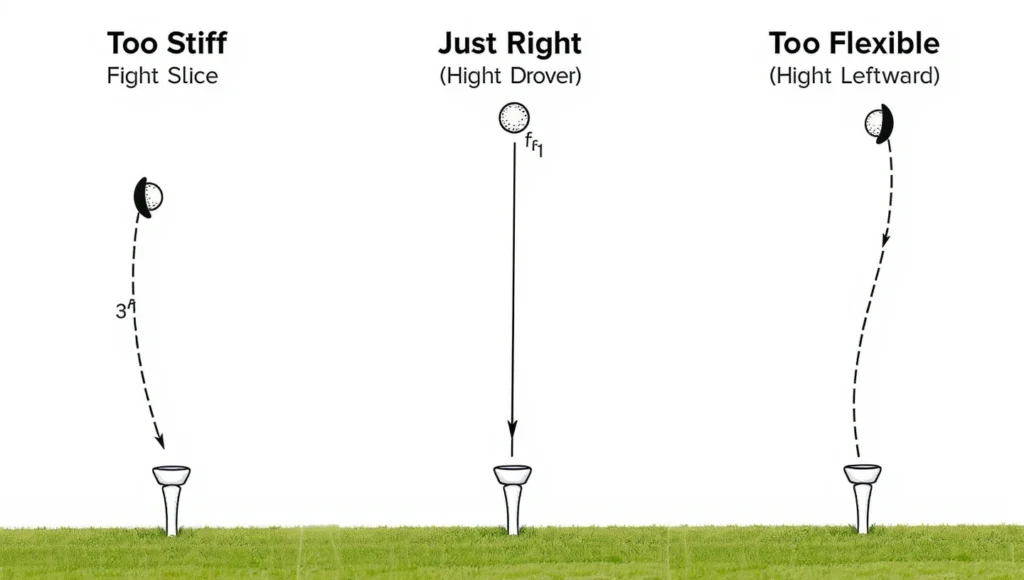
- Weak Slices: The shaft doesn’t kick forward enough to help you square the face. The face stays open at impact, putting left-to-right spin on the ball and sending it weakly into the right-hand rough.
- Low Ball Flight: You’ll struggle to get the ball into the air. The shots will feel dead and won’t carry very far, costing you significant distance.
- Harsh Feel: It feels like you’re hitting the ball with a rigid pipe. You get very little feedback on your shots, making it hard to tell a good strike from a bad one.
What Happens If Your Driver Shaft is Too Flexible?
While less common for beginners, a naturally athletic new golfer might have a swing speed that’s too fast for a Regular or Senior flex shaft.
- High Hooks: The shaft kicks too much and too early, causing the clubface to close before impact. This sends the ball high and to the left (for a right-handed golfer).
- “Ballooning” Shots: The shots launch very high with too much spin, getting caught by the wind and losing all their forward momentum and distance.
- Inconsistent Feel: The shaft can feel “whippy” and difficult to control, as if you can’t feel where the clubhead is during your swing.
Finding that “Goldilocks” shaft—the one that’s just right—makes the game infinitely easier. To learn more about how equipment impacts your game, you can read this excellent guide on club fitting from the PGA of America.
If you’re looking for a great beginner driver that typically comes with a forgiving Regular flex shaft, I often recommend the Callaway Edge Driver. It’s known for its large sweet spot and technology that helps reduce slicing, making it a perfect match for the advice in this article.
Frequently Asked Questions (FAQ)
For the vast majority of beginners, Regular flex is significantly better. It is designed for the swing speeds that most new golfers have. Only choose a Stiff flex if you are a strong, athletic player who already has a swing speed over 95 mph.
You can, but you’ll be doing it by developing bad swing habits. You’ll likely learn to “flip” your hands at the ball to try and close the face, which is a very inconsistent and weak move. It’s much better to use equipment that helps you develop a good, fundamental swing.
I would be very cautious. While the clubhead might be great, the shaft is the engine. If that engine doesn’t match your swing, you’ll struggle. The good news is that you can often get a new shaft installed, but that can cost $100 or more. It might be better to find a driver that already has the right shaft for you. We will be writing an article on Best Forgiving Drivers for High Handicappers soon, so keep an eye out for that!
Absolutely. Generally, more flexible shafts (like Senior and Regular) are also lighter. This lighter weight helps slower-swinging players generate more speed. Stiffer shafts are heavier to provide more stability and control for powerful players.
Final Verdict: The Best Driver Flex for Beginner Golfers
The single biggest takeaway is this: match your driver shaft flex to your swing speed.
Don’t get caught up in thinking you need a “Stiff” shaft to be a “real” golfer. In my experience, the players who are most honest about their abilities and choose the right equipment are the ones who improve the fastest and have the most fun.
For almost every beginner reading this, a driver with more flex (Regular or Senior) will be your best friend. It will help you launch the ball higher, hit it straighter, gain confidence, and unlock the distance you’re capable of.
Now it’s your turn. Head to a driving range, try a friend’s driver with a different flex, or use our 7-iron test to see where you stand.
What driver flex are you currently using? Let us know in the comments below!