
How to Stop Three-Putting & Shave Strokes Off Your Game
There’s no feeling in golf that sinks your heart quite like it. You’ve just hit a beautiful approach shot, landing your ball safely on the green. You’re feeling confident, thinking about a birdie or an easy par. Then, three putts later, you’re walking off with a frustrating bogey—or worse.
Three-putting is one of the fastest ways to inflate your score and ruin an otherwise great round. But what if I told you that eliminating them is the single quickest way to lower your handicap? It’s not about having a perfect, tour-level putting stroke. It’s about being smarter, more strategic, and more consistent on the greens.
In my years of playing and coaching, I’ve found that most amateurs struggle with the same two or three things. In this guide, we’re going to break down exactly how to stop three-putting every hole in golf with practical drills, mental strategies, and a new way of thinking about your putting.
Key Takeaways: Your Fast-Track to Fewer Putts
- Master Lag Putting: The number one goal on any putt outside of 15 feet is to get the ball within a 3-foot “tap-in” circle around the hole. Focus on speed, not the cup itself.
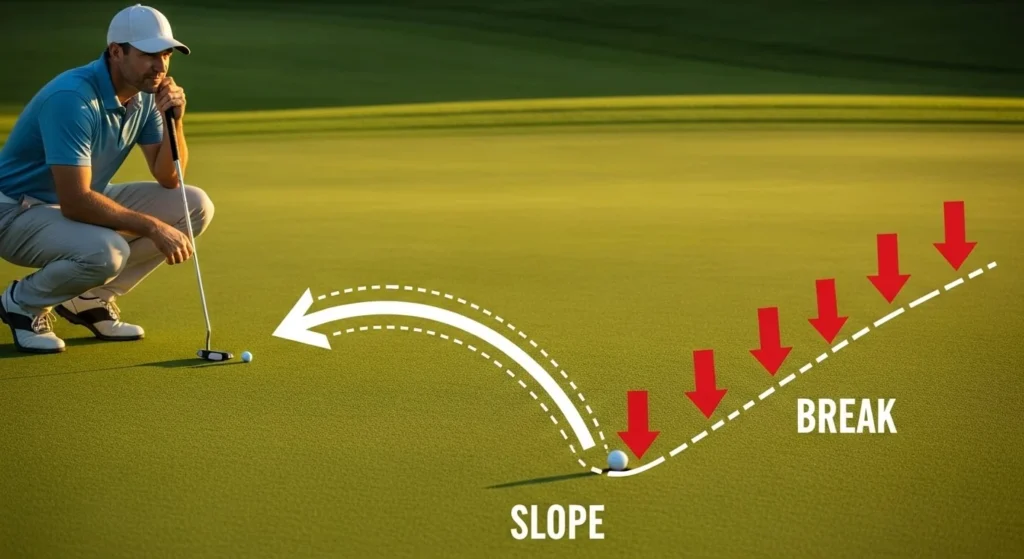
- Read Greens Systematically: Don’t just glance at the line. Look at the putt from behind the ball and from the low side to get a true read on the break and slope.
- Build a Rock-Solid Routine: A consistent pre-putt routine calms your nerves and builds repeatable muscle memory, especially for those tricky 4-footers.
- Practice with Purpose: Instead of mindlessly hitting balls, use specific drills like the “Ladder Drill” for distance control and the “Clock Drill” for short-putt confidence.
Why Three-Putting Is Destroying Your Golf Score
Before we dive into the fixes, let’s be clear about the damage. A single three-putt might not seem like a big deal, but if you do it four or five times a round, that’s four or five strokes added to your score. For a mid-handicapper, eliminating those mistakes can be the difference between shooting in the 90s and finally breaking 80.
The truth is, professional golfers don’t make every putt. Their secret weapon is avoiding three-putts. They are masters of getting their first putt close, taking the pressure off, and securing an easy two-putt. That’s the mindset we need to adopt.
The #1 Priority: How to Stop Three-Putting with Superior Distance Control
If you remember only one thing from this guide, let it be this: distance control is everything in putting. Amateurs are often so focused on the line that they completely neglect the speed. A putt with the perfect line but terrible speed will never go in and often leaves you with a nightmare second putt.
Here’s how to dial in your distance control.
Embrace the Art of the Lag Putt
On any putt longer than about 15-20 feet, your primary goal is not to make it. Your goal is to lag it up to the hole, leaving yourself a simple, stress-free tap-in.
What I’ve found works best is to visualize a three-foot circle around the hole. This is your real target. By taking away the pressure of making the putt, you free up your stroke to be smoother and more focused on speed.
A Pro Tip: Before your practice strokes, look at the hole, then look back at the ball. Do this a few times to subconsciously tell your brain how far away the target is. Then, during your practice strokes, keep your eyes on the hole—this helps you feel the distance rather than thinking about it mechanically.
The Ladder Drill for Feel and Precision
This is my go-to drill for developing a feel for different distances.
- Find a relatively flat part of the practice green.
- Place three balls at 15, 25, and 35 feet from a hole.
- Start with the 15-foot putt. Your goal is to get it past the hole but not more than three feet past.
- Move to the 25-footer with the same goal. Then the 35-footer.
- Once you complete that, work your way back down the “ladder.”
- This drill trains your brain and body to adjust the length of your stroke for different distances instinctively.
Become a Master Green Reader
Poor speed is problem #1, but misreading the green is a close second. Many golfers take a quick look and guess, but a few extra seconds of analysis can save you a stroke.
Get a Low-Side Perspective
The best way to see the true slope of a green is to look at your putt from the “low side”—the lowest point between your ball and the hole. Walking to the side and crouching down will reveal breaks you’d never see from standing directly behind the ball. Your eyes can play tricks on you, but gravity doesn’t lie.
Pay Attention to the Whole Green
Where is the water? Where are the bunkers? Greens are designed to slope away from high points and towards collection areas. As you walk up to the green, take note of the overall topography. This general understanding will give you a head start on reading your specific putt. For more advanced techniques, you can explore resources like the PGA of America’s guide on green reading.
If you want to dive deeper into this topic, we have a complete guide that can help. [How to Read Greens Like a Pro]
Perfecting Your Putting Stroke for Rock-Solid Consistency
You don’t need a textbook stroke, but you do need a repeatable one. Consistency comes from solid fundamentals.
Maintain a Light Grip Pressure
A “death grip” on the putter creates tension in your hands, wrists, and forearms, which kills your feel for distance. Hold the putter just firmly enough that someone couldn’t easily snatch it out of your hands. This allows the big muscles in your shoulders and back to control the stroke, creating a smooth pendulum motion.

Keep Your Head and Body Still
In my experience, this is the most common fault I see in amateurs. Any swaying of the lower body or peeking with your head during the stroke will change the putter’s path and impact point.
A Simple Fix: When you practice, listen for the ball to drop into the hole. Don’t look up to see it. This forces you to keep your head still through impact, which is crucial for hitting your intended line. A great tool to help with this is a putting alignment aid, like the EyeLine Golf Putting Mirror. It provides instant feedback on your eye position and ensures your shoulders are aligned with your target.
Actionable Drills to Erase Three-Putts for Good
Drills build confidence and make good habits automatic. Dedicate 15-20 minutes to these before each round.
The Clock Drill for Short Putts
This drill is fantastic for building confidence on those nervy putts inside five feet.
- Place four balls in a circle around the hole at 3-foot intervals, like numbers on a clock (12, 3, 6, and 9 o’clock).
- Work your way around the circle, sinking each putt.
- Don’t move on until you’ve made all four in a row.
- Once that’s easy, move the balls out to four feet. This drill prepares you for the different little breaks you’ll face on short putts and makes the stroke feel automatic. To practice this at home, a high-quality putting mat like the Perfect Practice Putting Mat is an excellent investment.
For more practice ideas, check out our guide on drills you can do anywhere. [Simple Golf Drills You Can Do at Home]
Frequently Asked Questions About Three-Putting
The most common reasons are poor distance control on the first putt, misreading the green, and a lack of confidence over short second putts. Most amateurs focus too much on the line and not enough on getting the speed right.
While pros average around 29 putts per round, a great goal for an amateur golfer is to get under 36 putts. This means averaging two putts per green. If you can keep your total putts around 32-34, you are doing exceptionally well and likely have very few three-putts.
Nerves often come from a fear of missing. The best way to combat this is through a consistent pre-putt routine and purposeful practice. Drills like the “Clock Drill” build confidence so that when you’re on the course, the situation feels familiar and the stroke is automatic. Focus on the process, not the result.
Maybe, but it’s not the first thing you should do. A new putter won’t fix poor fundamentals. First, work on your distance control and stroke consistency. If you’ve done that and still feel uncomfortable, then getting fitted for a putter could help. [Choosing the Perfect Putter for Your Stroke]
Stop Three-Putting for Good: Your Final Guide to Lower Scores
Stopping the three-putt isn’t about magic; it’s about strategy, practice, and a shift in mindset. Start thinking “two-putt” on every green. Prioritize speed over line, develop a repeatable routine, and practice drills that build real, on-course confidence.
By focusing on your distance control and becoming a smarter green reader, you’ll leave yourself shorter second putts. By building your nerve on those short ones, you’ll start converting them with ease. Do this, and you won’t just stop three-putting—you’ll watch your scores drop faster than ever before.
What’s your biggest putting frustration? Try these techniques on your next trip to the course and leave a comment below letting us know how they worked for you!