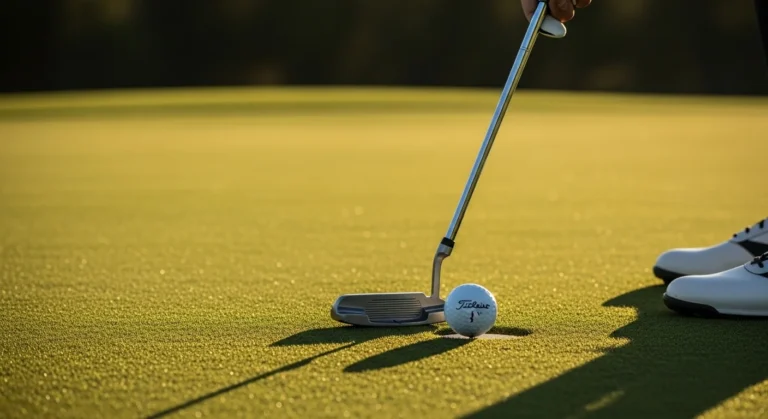

How to Read a Green for Beginners: Your Ultimate Putting Guide
Stepping onto the putting green can feel like entering a different world. The perfectly manicured grass, the subtle slopes, and the seemingly impossible task of getting that little white ball into a tiny cup can be intimidating, especially for beginners. I’ve been there, staring at a putt, completely clueless about where to aim.
But what if I told you that reading a green isn’t some secret art known only to the pros? It’s a skill, and like any skill, it can be learned. With the right approach and a little practice, you can transform your putting from a game of chance into a game of precision.
In this guide, we’re going to break down exactly how to read a green for beginners, providing simple, actionable putting tips that will give you confidence over every putt. We’ll cover everything from understanding slope to judging speed, so you can stop guessing and start making.
How to Read a Green: Your 6-Step Checklist
- Start Before You’re on the Green: Assess the overall slope of the land as you approach the green.
- Use Your Feet: Your feet are sensitive tools. Feel the slope by walking the line of your putt.
- Find the Apex: Identify the highest point of the break where the ball will turn most.
- Speed is King: The speed of your putt determines how much the ball will break. A dying putt will break more than a firm one.
- Look From All Angles: View your putt from behind the ball, behind the hole, and from the low side to get a complete picture.
- Trust Your Gut: Your initial read is often the most accurate. Don’t overthink it.
Understanding the Basics: What Does “Reading the Green” Mean?
Before we dive into the “how,” let’s quickly cover the “what.” Reading a green simply means predicting the path your golf ball will take to get to the hole. This involves analyzing three main factors:
- Slope (The Break): The tilt or angle of the ground that will cause your ball to curve left or right.
- Grain (Grass Direction): The direction the blades of grass are growing, which can influence speed and break.
- Speed (The Pace): How hard you need to hit the putt to get it to the hole.
Mastering these three elements is the foundation of great putting. Let’s break down how to analyze each one.
How to Read a Green: A Beginner’s Step-by-Step Guide
Reading a green is a process. It’s not a single glance, but a series of observations that build a complete picture. Here are the essential putting tips I’ve learned over years of playing.
Step 1: Get the Big Picture (Start Your Read Early)
One of the biggest mistakes beginners make is only starting to read the green once they’ve marked their ball. In my experience, your read should start the moment you begin walking up to the green.
From 20-30 yards away, look at the overall landscape.
- Is the entire green tilted from back to front?
- Is there a large hill on the right side or a water hazard on the left?
- Where is the highest point on the green?
The general topography of the surrounding area has a huge influence. If there’s a mountain to your right, chances are most putts will break away from it. This big-picture view gives you a baseline for the break before you even get to your ball.

Step 2: Use Your Feet to Feel the Slope
This is a pro tip that feels a bit strange at first but is incredibly effective. Your feet are amazing at detecting subtle changes in slope that your eyes might miss.
Once you’re on the green, walk along the path your putt will take. Do you feel more pressure on your left foot or your right foot?
- If you feel the slope pushing on the inside of your right foot, you’re on a right-to-left breaking putt.
- If you feel it on the inside of your left foot, it’s a left-to-right break.
This physical feedback is one of the most reliable ways to confirm what your eyes are telling you.
Step 3: Analyze the Putt from Multiple Angles
To get a complete understanding of your putt, you need to see it from different perspectives. I always look at a putt from at least three different spots:
- From Behind the Ball: This is your primary view. From here, you can visualize the initial line your ball will take.
- From Behind the Hole: Walk past the hole and look back at your ball. This vantage point is fantastic for seeing the last few feet of the putt, where the ball will be slowing down and breaking the most.
- From the Low Side: Stand halfway to the hole on the “low” side of the break (the side the ball will be curving toward). This angle often makes the slope appear much more dramatic and can help you truly appreciate the amount of break you need to play.
Step 4: Pick Your Apex—The “Aim Point” of the Putt
You don’t aim at the hole on a breaking putt; you aim at the apex. The apex is the highest point of the putt’s curve. It’s the spot where the ball will stop moving away from the hole and start breaking back towards it.
Once you’ve determined the break, visualize the entire path of the ball. Find that peak point and pick a specific spot on the green to aim at—maybe a discolored blade of grass or an old ball mark. Focusing on this intermediate target is much easier than trying to “feel” the break.
For beginners, a putting alignment aid like the PuttOUT Putting Mirror can be a game-changer. It helps ensure your eyes are directly over the ball and your putter face is square to your intended line, making it easier to start your putt on the apex you’ve chosen.
Step 5: Don’t Forget the Grain
The direction the grass grows, known as the grain, can subtly affect your putt’s speed and break. While not as impactful as slope, it’s the secret sauce that separates a good read from a great one.
Here’s a quick guide to reading grain:
- Shiny/Light Green: The grain is growing away from you (downgrain). Your putt will be faster.
- Dull/Dark Green: The grain is growing towards you (into the grain). Your putt will be slower.
If you’re unsure, look at the edge of the cup. The grass on one side will often look a little ragged or frayed—that’s the direction the grain is growing.
Step 6: Putting Tips for Judging Speed (Pace)
Speed is arguably the most crucial part of putting. You can have a perfect read, but if your speed is wrong, the ball will miss. The pace you hit the putt directly impacts how much the ball will break.
- A firm putt (hit harder) will hold its line longer and break less.
- A soft putt (hit slower) will be affected by the slope more and break more.
What I’ve found works best is to try and die the ball into the hole. I aim for a speed that would let the ball roll about 12-18 inches past the cup if it missed. This “die-in” speed gives the ball the best chance to fall in from the sides. Before you putt, take a few practice strokes while looking at the hole, trying to feel the distance. The Ultimate Guide to Perfecting Your Putting Stroke
Bringing It All Together: A Pre-Putt Routine
Now, let’s combine these putting tips into a simple, repeatable routine for beginners.
- Approach & Assess: As you walk to the green, note the overall landscape.
- Walk the Line: Walk from your ball to the hole, feeling the slope with your feet.
- Crouch & See: Get behind your ball and visualize the line.
- Confirm the Read: Walk behind the hole and to the low side to confirm the break.
- Pick Your Apex: Choose a specific spot to aim at.
- Practice the Pace: Take two or three practice strokes, feeling the speed needed to roll the ball 18 inches past the hole.
- Step In & Trust It: Address the ball, take one last look at the hole, and make a confident stroke.
Frequently Asked Questions (FAQ)
A double-breaking putt, which curves one way and then the other, is one of the trickiest shots in golf. The key is to identify which break is more dominant. Generally, the putt will be affected more by the slope when it’s moving slower—near the hole. Focus on getting the speed right and aim for the middle of the two breaks. A great two-putt is a victory here.
Plumb-bobbing is a technique where a golfer holds their putter up vertically to gauge the slope. While some players swear by it, it can be complicated for beginners. For now, I’d recommend focusing on using your eyes and feet, which are more intuitive.
The best way is to spend time on a practice green. Try the “gate drill”: Find a breaking putt and place two tees a few inches apart on your intended starting line, creating a “gate.” Your goal is to roll the ball through the gate to see if your read was correct. This drill connects your read to your stroke. For a deeper, scientific look at how break is affected by speed, Golf Digest offers a fantastic breakdown from top instructors on the physics of green reading.
Absolutely. The two most common types are Bentgrass and Bermuda grass. Bentgrass has a finer texture and less grain, making putts roll true. Bermuda grass is coarser and has a much stronger grain, which will significantly affect the speed and break of your putts, especially in the afternoon.
Mastering Green Reading: Your Final Step to Sinking More Putts
Learning how to read a green is a journey, not a destination. No one, not even the pros, gets it right every single time. The goal is to replace guessing with an educated process.
By using your eyes to see the big picture, your feet to feel the subtle slopes, and a consistent routine to put it all together, you will dramatically improve your putting. You’ll start to see the lines, understand the breaks, and feel more confident over every single putt.
Now it’s your turn. The next time you’re on the course, try these putting tips. Walk the line, look from behind the hole, and most importantly, trust your read.
What’s the biggest challenge you face when reading greens? Share your thoughts in the comments below—I’d love to help!