

How to Choose the Best Driver for Your Swing: A Complete Guide
Walking into a golf shop to buy a new driver can feel overwhelming. You’re hit with a wall of shiny club heads, confusing numbers, and marketing promises of 20 more yards. How do you cut through the noise and find the one club that will actually help your game?
The secret isn’t buying the most expensive driver or the one the pros use. The secret is finding the driver that’s perfectly matched to your unique swing. In my years of playing and testing gear, I’ve learned that the right driver can transform your confidence off the tee, leading to longer, straighter shots and lower scores.
This guide will break down everything you need to know, step-by-step. We’ll ditch the confusing jargon and focus on what really matters, so you can choose the best driver for your swing with total confidence.
At a Glance: How to Choose Your Driver
- Know Your Swing Speed: This is the most critical factor. It determines your shaft flex and ideal loft.
- Match Loft to Speed: Slower swings need higher loft (10.5°+) to get the ball in the air. Faster swings need lower loft (8°-10°) to control spin and trajectory.
- Pick the Right Shaft Flex: Your swing speed directly correlates to the shaft flex you need (Regular, Stiff, etc.). The wrong flex kills distance and accuracy.
- Prioritize Forgiveness: For most amateur golfers, a driver with a high MOI (Moment of Inertia) will be a game-changer, helping your off-center hits fly straighter and longer.
Why Your Driver is More Than Just a Club
Before we dive into the technical details, let’s be clear: the driver sets the tone for the hole. A great drive puts you in a prime position for your approach shot, builds momentum, and fills you with confidence. A poor drive, on the other hand, can lead to penalty strokes and a frustrating start.
That’s why finding the right one is so important. It’s not just about raw distance; it’s about usable distance. What good is hitting it 280 yards if it’s in the trees? The goal is to find a driver that maximizes your distance potential while keeping the ball in play.
How to Choose the Best Driver for Your Swing: Start with Yourself
The biggest mistake I see golfers make is choosing a driver based on what their favorite tour pro uses. A pro’s swing is vastly different from an amateur’s. To find the best club for you, we need to analyze your swing.
Step 1: Know Your Swing Speed
Everything starts here. Your swing speed is the single most important piece of data for choosing a driver. It dictates the loft and, most importantly, the shaft flex you’ll need.
What I’ve found works best is to get a precise number, not just a guess. You can do this by:
- Visiting a Golf Store or Range: Most have a launch monitor you can use.
- Getting a Professional Fitting: This is the best option and we’ll discuss it more later.
- Using a Personal Launch Monitor: Devices like the Garmin Approach R10 or FlightScope Mevo have become incredibly accurate and affordable. They are a fantastic investment for any serious golfer.
Here’s a general breakdown of swing speeds and what they mean for you:
- Slow Swing Speed (Below 90 mph): Common for many seniors, juniors, and new golfers. The focus here is on maximizing launch to get the ball in the air and increase carry distance.
- Average Swing Speed (90-105 mph): This is where the majority of male amateur golfers fall. You have a wide range of options but need to dial in the right combination of loft and flex.
- Fast Swing Speed (Above 105 mph): Typically applies to lower-handicap and more athletic players. The focus shifts to controlling spin and trajectory to prevent the ball from ballooning or flying offline.
Step 2: Understanding Driver Loft
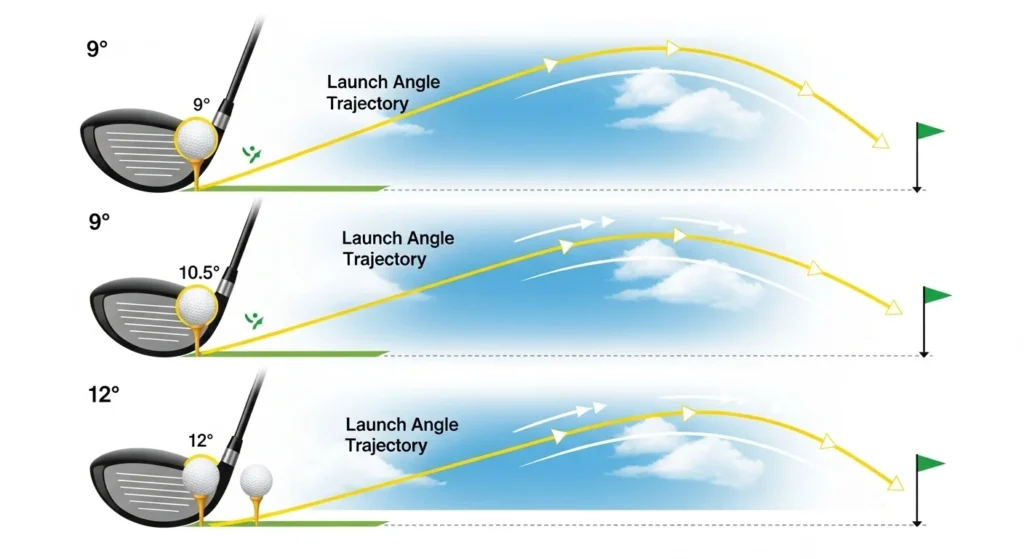
Loft is the angle of the clubface, and it’s your best friend for optimizing launch. The right loft helps you hit the perfect “high launch, low spin” shot that travels the farthest.
A common misconception is that lower loft equals more distance. This is only true if you have a very high swing speed. For most players, more loft is actually better!
Pro Tip: Use your swing speed as a starting point for choosing your loft:
- Below 90 mph Swing Speed: Look for a driver with 10.5° to 14° of loft. Don’t be afraid of higher lofts; they are essential for getting the ball airborne.
- 90-105 mph Swing Speed: The sweet spot is usually between 9.5° and 11.5°. Many modern adjustable drivers allow you to experiment within this range.
- Above 105 mph Swing Speed: You’ll likely benefit from a lower loft, typically between 8° and 10°, to keep the ball from spinning too much.
Step 3: Decoding Shaft Flex and Weight
If the driver head is the engine, the shaft is the transmission. It delivers power to the ball. Using the wrong flex is one of the quickest ways to lose both distance and accuracy.
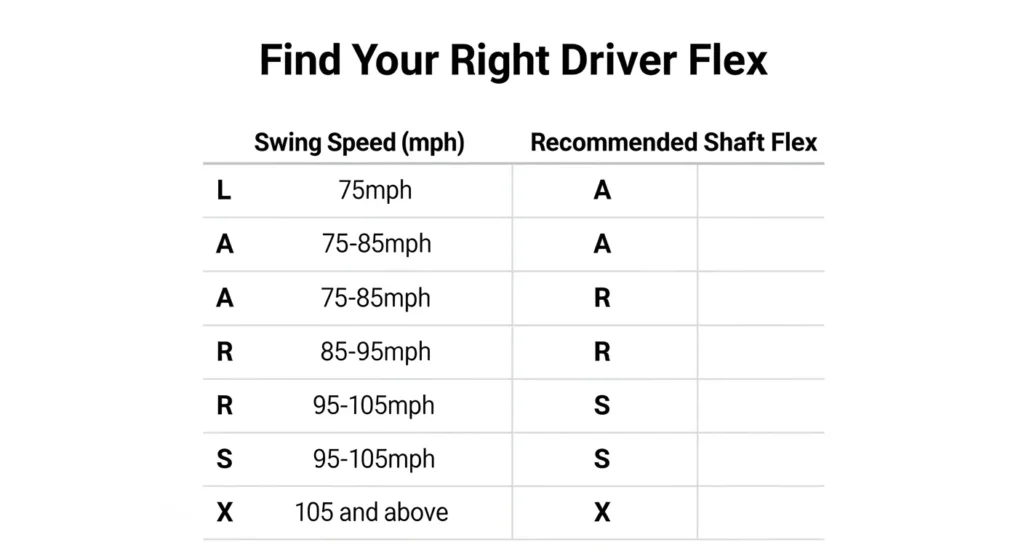
The shaft flex should match your swing speed to ensure the clubface is square at impact.
- Too Stiff: A shaft that’s too stiff won’t flex enough, often causing the face to be open at impact, resulting in a slice and a lower ball flight.
- Too Flexible: A shaft that’s too soft will flex too much, causing the face to be closed at impact, resulting in a hook and a higher, ballooning ball flight.
Here’s a simple chart to match your speed to the right flex:
Shaft weight is another factor. Lighter shafts can help increase swing speed, while heavier shafts offer more stability and control. In my experience, most players with average swing speeds do well with a shaft in the 60-70 gram range.
For more detail, check out our complete article on the topic: [Understanding Golf Shaft Flex: A Complete Guide].
Step 4: Forgiveness vs. Workability
Let’s be honest—we don’t hit the center of the clubface every time. That’s where forgiveness comes in. In driver design, this is often measured by “MOI” (Moment of Inertia). A higher MOI means the club head is more resistant to twisting on off-center hits.
- High Forgiveness / “Game-Improvement” Drivers: These are the best choice for over 90% of golfers. They have high MOI, larger sweet spots, and often a slight draw bias to help fight a slice. They make your mis-hits much more playable. The TaylorMade Qi10 Max or Callaway Paradym Ai Smoke Max are fantastic examples.
- Low Forgiveness / “Players” Drivers: These drivers have a smaller, more compact head shape and are designed for skilled players who want to shape the ball (intentionally hit a draw or a fade). They are less forgiving on mis-hits.
My advice? Be honest about your skill level. The extra forgiveness will save you far more strokes than the ability to hit a 10-yard fade on command.
The Ultimate Advantage: Custom Fitting
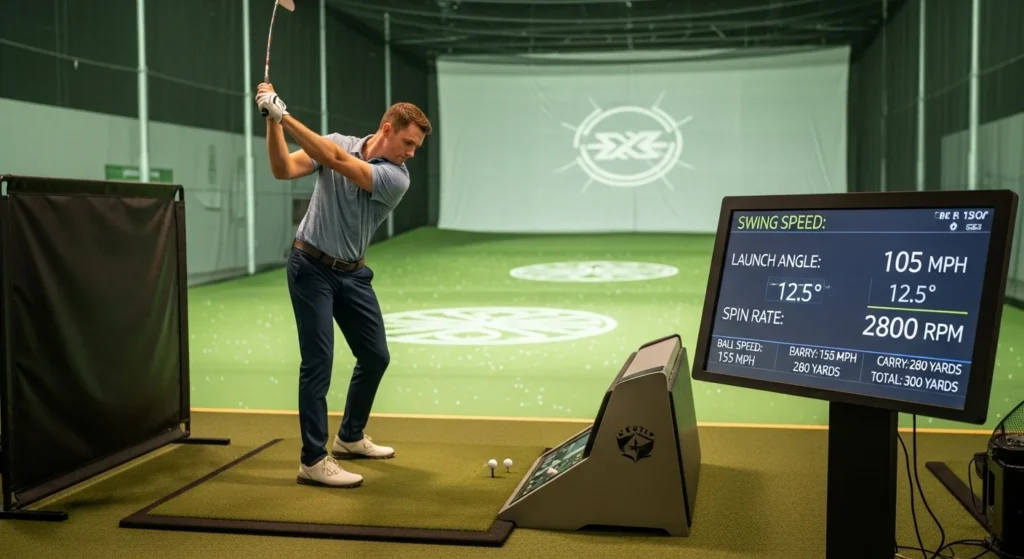
While this guide gives you the knowledge to make a great choice, nothing beats a professional custom fitting. A fitter will use a launch monitor to analyze every aspect of your swing and let you test different heads and shafts to find the perfect combination.
In my experience, a fitting is the single best investment you can make in your golf equipment. You’ll walk away knowing with 100% certainty that your driver is optimized for you. The data doesn’t lie!
To learn what to expect, read our guide on [How to Prepare for Your First Golf Club Fitting].
Frequently Asked Questions (FAQ)
Your swing speed. It’s the foundation that helps you determine the correct loft and shaft flex, which are the two biggest factors in performance.
Technology improves, but not as fast as marketing departments suggest! A well-made driver will perform well for 4-5 years. The main reason to upgrade is if your swing changes significantly (e.g., you gain a lot of speed) or if a new model offers a significant leap in forgiveness that could truly help your game. For more on this, it’s worth checking the official equipment rules from governing bodies like the [USGA Conforming Club List].
Absolutely. Modern adjustable drivers allow you to change the loft and lie angle, and sometimes move weights. This is incredibly useful for fine-tuning ball flight. For example, if you’re hitting the ball too low, you can add a degree of loft. It’s like having a mini-fitting session every time you go to the range.
Final Thoughts: Choosing the Best Driver for Your Swing
Choosing the right driver is a journey of self-discovery. It’s about understanding your own game, being honest about your abilities, and matching the technology to your unique swing. By focusing on the core fundamentals—swing speed, loft, shaft flex, and forgiveness—you can filter out the hype and find a club that inspires confidence.
The perfect driver won’t just add yards to your tee shots; it will help you find more fairways, leading to better scores and a lot more fun on the course.
Now I want to hear from you! What’s the biggest challenge you’ve faced when buying a new driver? Leave a comment below and let’s talk about it!