How Often Should You Replace Your Golf Glove? (The Definitive Guide)
That feeling of sliding on a brand-new golf glove is one of the simple pleasures of the game. It’s soft, tacky, and fits… well, like a glove. But that perfect feel doesn’t last forever. Your glove is the only piece of equipment that connects you to the club, and when it starts to fail, your game can suffer.
But how do you know when it’s officially time to retire your trusty glove and invest in a new one? It’s a question I get asked all the time. Many golfers wait too long, losing grip and confidence without even realizing the cause.
The truth is, there isn’t a single magic number for every player. However, based on years of experience and testing, I’ve created this definitive guide to help you know exactly when it’s time for a change and how to get the most out of every glove you buy.
Key Takeaways: The Quick Answer
- General Rule: For the average golfer, a golf glove should be replaced every 10-15 rounds.
- Look for Signs: The most important factors are visible wear, not just rounds played. Look for worn-out palms, stiffness, cracks, or holes.
- Performance Matters: If you feel the club slipping or twisting during your swing, it’s time for a new glove, regardless of how it looks.
- Extend Lifespan: You can double your glove’s life by rotating between 2-3 gloves, storing them properly, and airing them out during rounds.
The Big Question: How Often Should You Replace Your Golf Glove?
Let’s get right to it. As mentioned, the general rule of thumb is to replace your golf glove every 10 to 15 rounds. If you’re a regular at the driving range, consider a bucket of balls equivalent to one round.
However, this is just a starting point. I’ve seen players burn through a glove in five rounds, and I’ve seen others make one last for twenty. The real answer depends on several key factors that are unique to you and your game. Think of your glove’s lifespan less like a calendar and more like the tread on a car tire—it wears down based on use and conditions.
Key Factors That Influence Your Golf Glove’s Lifespan
To truly understand how long your glove will last, you need to look beyond the number of rounds. In my experience, these are the four biggest factors that determine a glove’s durability.
1. Frequency of Play and Practice
This one is the most obvious. The more you swing a golf club, the faster your glove will wear out.
- The Weekend Golfer: If you play once or twice a month, that 10-15 round guideline is likely very accurate.
- The Dedicated Player: If you’re playing twice a week and hitting the range three more times, you’re putting a lot more stress on the material. You might need a new glove every month.
2. Climate and Weather Conditions
Where you play has a massive impact. Heat and humidity are the natural enemies of a golf glove, especially premium leather ones.
Sweat from your hand and moisture from the air cause the leather’s natural oils to break down. When the glove dries, it can become stiff, crusty, and lose all its tackiness. Playing in the rain is even tougher, as a soaked glove will almost never feel the same again once it dries.
Pro Tip: For golfers in humid climates or who often play in the rain, I highly recommend looking at synthetic or hybrid material gloves. A quality all-weather glove, like the FootJoy WeatherSof, can be a game-changer for durability in damp conditions.
3. Your Grip Pressure (The Silent Glove Killer)
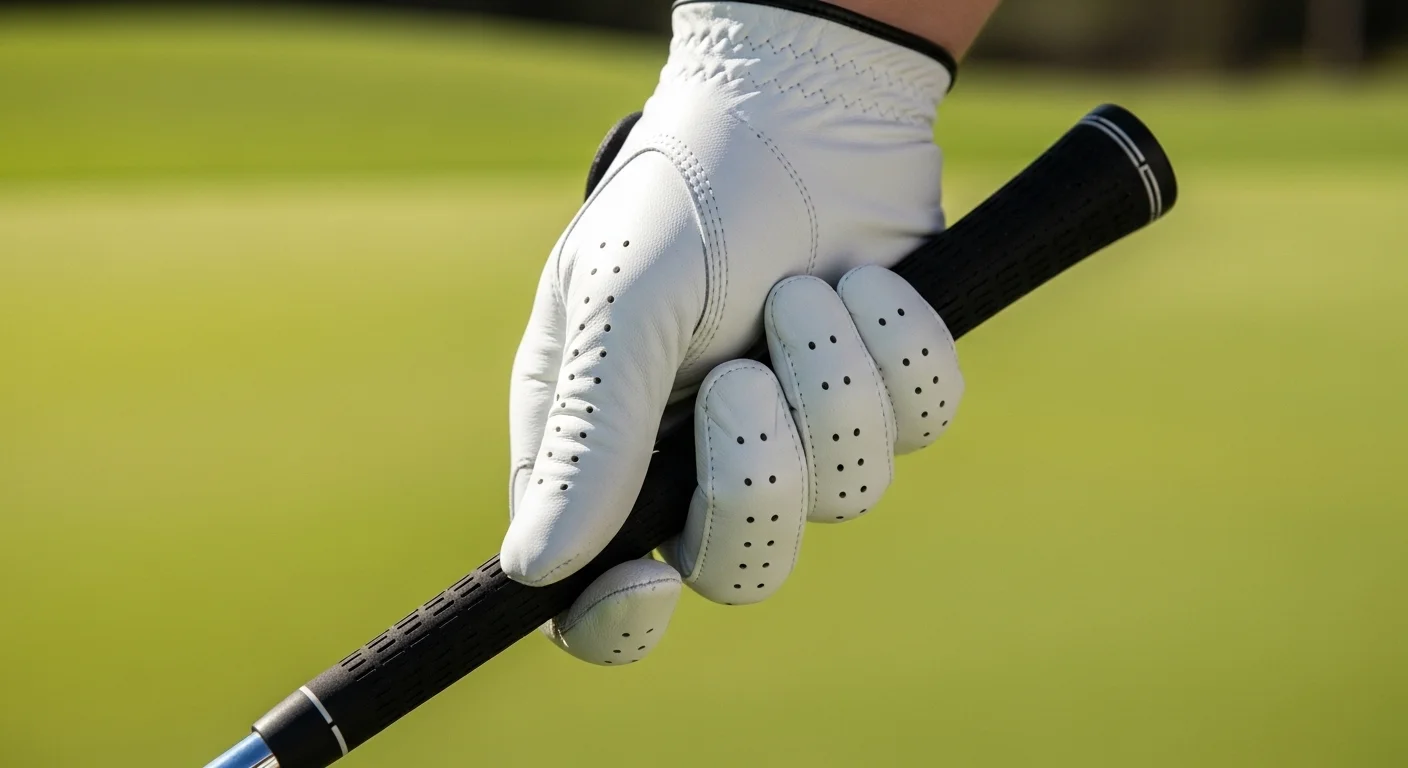
This is the hidden factor that destroys more gloves than anything else. Many amateur golfers grip the club far too tightly—what’s often called a “death grip.” This excessive pressure creates a huge amount of friction between your hand and the club, rapidly wearing down the palm and finger areas of your glove.
If you notice your gloves are always wearing out in the palm, it’s a strong sign you might be squeezing the club too hard. Working on a lighter, more controlled grip will not only save you money on gloves but will dramatically improve your swing.
For more on this, check out our guide on The Ultimate Guide to Improving Your Golf Grip.
4. Glove Material: Leather vs. Synthetic
The material your glove is made from plays a major role in its lifespan.
- Cabretta Leather: This is the premium choice, prized for its exceptionally soft feel and breathability. It molds to your hand perfectly. However, it’s the least durable material and is highly susceptible to damage from moisture and sweat.
- Synthetic: Synthetic materials are designed for durability and flexibility. They hold their shape better, last longer, and perform exceptionally well in wet or humid conditions. The trade-off is that they don’t offer the same buttery-soft feel as Cabretta leather.
- Hybrid: These gloves offer the best of both worlds, often using leather in the palm and fingers for feel, with synthetic materials across the knuckles and back of the hand for flexibility and durability.
The Telltale Signs: How to Know When to Replace Your Golf Glove
Forget the round count for a moment. Your glove will give you clear physical signs when it’s ready to be retired. Learn to spot them, and you’ll never play with a worn-out glove again.
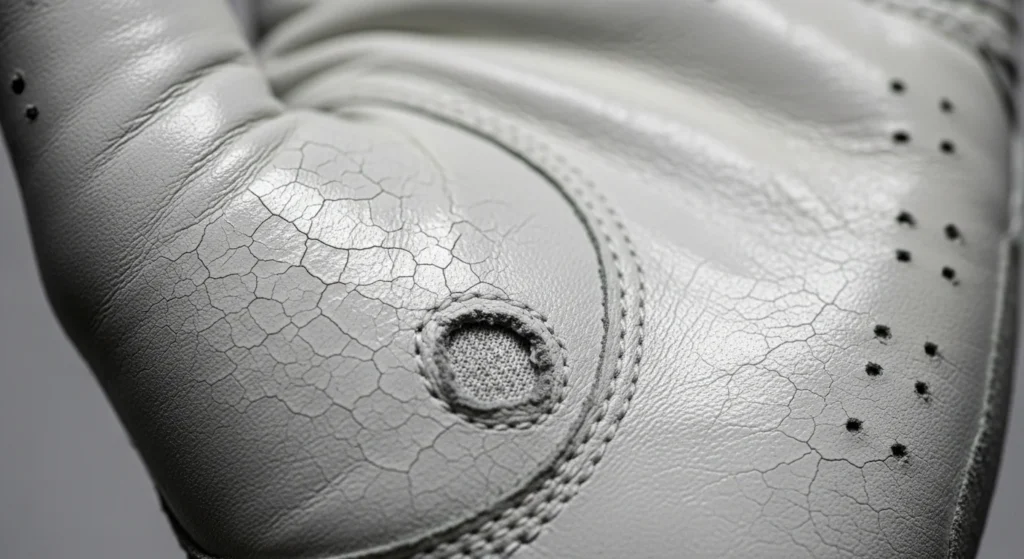
Sign 1: Visible Wear, Holes, and Tears
The most obvious clue is visible damage. Pay close attention to these key areas:
- The Palm: This is the highest contact area. If the material looks shiny, smooth, and feels slick rather than tacky, the glove is done. The grip is gone.
- The Thumb: This area takes a lot of friction, especially with a modern interlocking or overlap grip. A hole here is a common sign.
- Seams: Check the stitching around the fingers. If seams are starting to come apart, the glove’s structural integrity is compromised.
Sign 2: Stiff or Crunchy Texture
Does your glove feel more like cardboard than soft leather? This happens when the salts and oils from your sweat build up and dry, causing the material to become hard and brittle. A stiff glove not only feels terrible but also restricts the natural movement of your hand.
Sign 3: Loss of Grip and Tackiness
This is the performance test. The entire point of a glove is to improve your grip. If you find yourself re-gripping constantly or feel the club twisting in your hands during your swing—even slightly—it’s a massive red flag. Your glove is no longer doing its job. This loss of traction will cause you to subconsciously grip the club tighter, introducing tension and ruining your swing.
Sign 4: Stretching and Bagging
A good golf glove should fit like a second skin. Over time, the material can stretch out, creating a loose, “baggy” fit. When the glove is loose, your hand can move around inside it during the swing, which leads to blisters and a complete loss of control. If you can pinch a significant amount of material on the back of your hand or fingers, it’s too stretched out.
Pro Tips: How to Extend the Life of Your Golf Glove
You can’t make a glove last forever, but you can absolutely extend its useful life with a bit of care. Here are the techniques I personally use to get more rounds out of every glove.
- 1. Rotate Your Gloves: This is the single most effective strategy. Never rely on just one glove. Keep two or three in your bag and rotate them every few holes or every round. This gives each glove ample time to dry out completely, which prevents the leather from getting stiff and crusty.
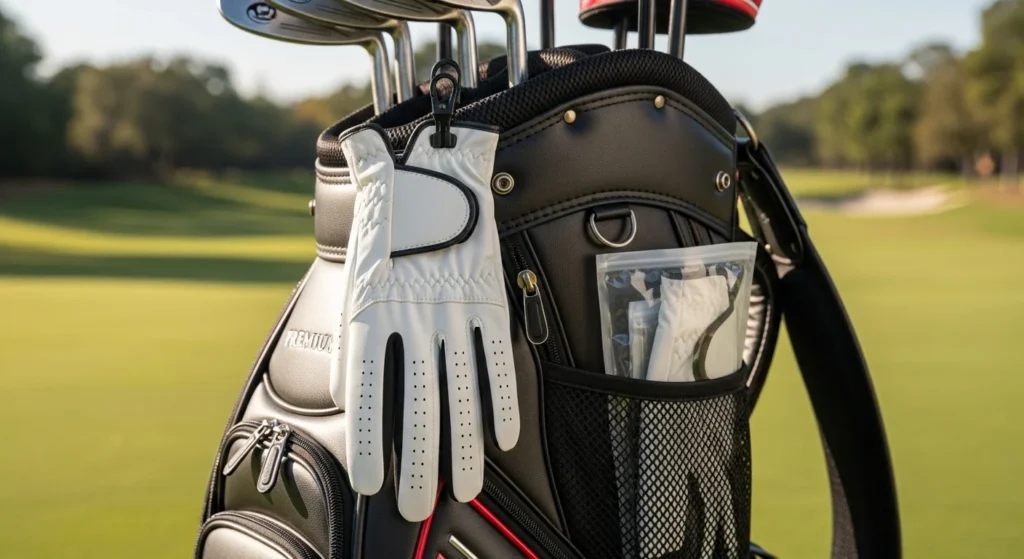
- 2. Store It Properly: Never, ever finish a round and just stuff your sweaty glove into a pocket in your bag. That’s a recipe for disaster. Take a moment to smooth it out flat and slide it back into its original cardboard and plastic sleeve. This helps it keep its shape and dry evenly. A simple Ziploc bag works well, too.
- 3. Air It Out During the Round: On hot, humid days, take your glove off between shots. You can hang it from the back of your golf cart’s roof support or attach it to your bag with a simple clip. Letting it breathe for just a few minutes at a time makes a huge difference.
- 4. Clean It Correctly: Leather gloves should not be put in a washing machine. To clean one, use a damp cloth (with water only, no soap) to gently wipe away any surface dirt and grime. Then, put the glove on, let it air dry for a bit, and remove it before it gets fully dry to help it retain its shape.
Frequently Asked Questions (FAQ)
For Cabretta leather gloves, the answer is no. Machine washing will strip the natural oils from the leather, leaving it stiff and brittle. For synthetic gloves, you often can, but always check the manufacturer’s instructions first. The gentle wipe-down method described above is the safest bet for all glove types.
Absolutely. A worn-out glove that has lost its tackiness forces you to grip the club tighter to prevent it from slipping. This creates tension in your hands, wrists, and forearms, which is a certified swing killer. It restricts your movement, reduces clubhead speed, and leads to inconsistency.
The best ways are to rotate between 2-3 gloves, always store it flat in its sleeve after a round, let it air dry between shots on hot days, and work on maintaining light grip pressure.
This is a matter of personal preference, but the vast majority of golfers, including nearly all tour professionals, take their glove off for putting. The reason is to get a better “feel” for the putter and the delicate touch required for the greens.
Final Thoughts: Your Glove is Your Connection to the Club
Treating your golf glove as a critical piece of performance equipment is a simple step that can have a big impact on your game. While the 10-15 round rule is a solid baseline, the real key is to pay attention to the signs of wear.
By learning to spot a worn-out palm or a loss of tackiness, you can ensure you always have the grip and confidence you need to play your best. And by taking a few simple care steps, you’ll get more value and performance out of every glove you own. For more on equipment standards, you can always refer to the official guidelines from organizations like the USGA.
What’s your experience with glove lifespan? Do you have a favorite brand that seems to last forever? Drop a comment below and let’s talk about it!