Driver vs. Iron: What’s the Difference and Which One Should You Use?
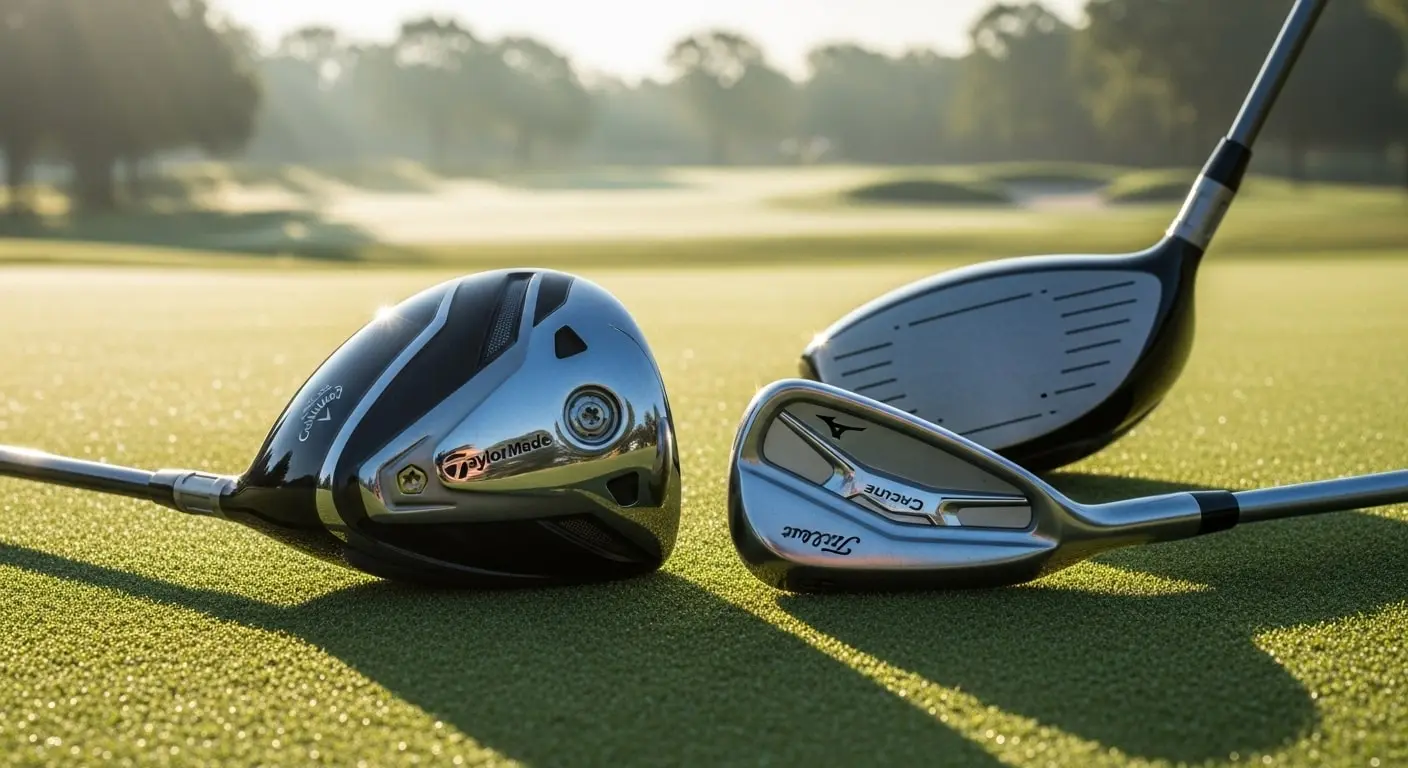
Stepping onto the first tee of a beautiful golf course is an amazing feeling. You look down the fairway, take a practice swing, and reach into your bag for a club. But wait… which one? You see a club with a giant head and another that looks more like a blade. They are the driver and the iron, and for beginners, the confusion is completely normal.
Choosing the right club can feel overwhelming, but it’s the foundation of a good golf game. The driver and the iron are built for entirely different jobs, and understanding their roles is one of the first major “aha!” moments for any new player. In my years of playing and teaching, I’ve seen how mastering this basic choice can instantly boost a golfer’s confidence.
This guide will break down everything you need to know about what is the difference between a driver and an iron. We’ll cover their physical characteristics, when to use each one on the course, and some pro tips to help you hit them both more effectively.
Key Takeaways: Driver vs. Iron
For those in a hurry, here’s the quick summary of the main differences:
- The Driver: This club is built for one thing: maximum distance. It has the largest head, the longest shaft, and the lowest loft in your bag. You’ll almost exclusively use it for your first shot on long holes (par 4s and 5s) from the tee box.
- The Irons: These clubs are all about precision and control. They come in a numbered set (typically 3-iron through 9-iron and wedges) designed for accuracy on your shots after the tee shot, like from the fairway or rough. Their main job is to get your ball onto the green.
- The Simple Rule: Think of it like this: Driver = Distance. Iron = Accuracy.
What is the Fundamental Difference Between a Driver and an Iron?
At the most basic level, the difference comes down to purpose. The driver is a specialized tool for hitting the ball as far as possible, while irons are a versatile set of tools for hitting the ball specific distances with control.
A driver is technically part of the “woods” family, even though they are now made of metal (like titanium and carbon composites). Its design is optimized to create massive clubhead speed to launch the ball down the fairway.
Irons, on the other hand, are designed to give you a toolbox of options. A 5-iron is built to go a different distance than a 7-iron or a 9-iron. This allows you to handle the 120, 150, or 180-yard shots you’ll face on your way to the hole. Their design focuses on creating the ideal trajectory and spin to make the ball land softly and stop near your target.
The Anatomy of a Golf Club: Key Differences in Driver and Iron Design
To truly understand their functions, you need to see how they’re built. The physical differences are obvious once you know what to look for.
Clubhead Size and Shape
This is the most noticeable difference.
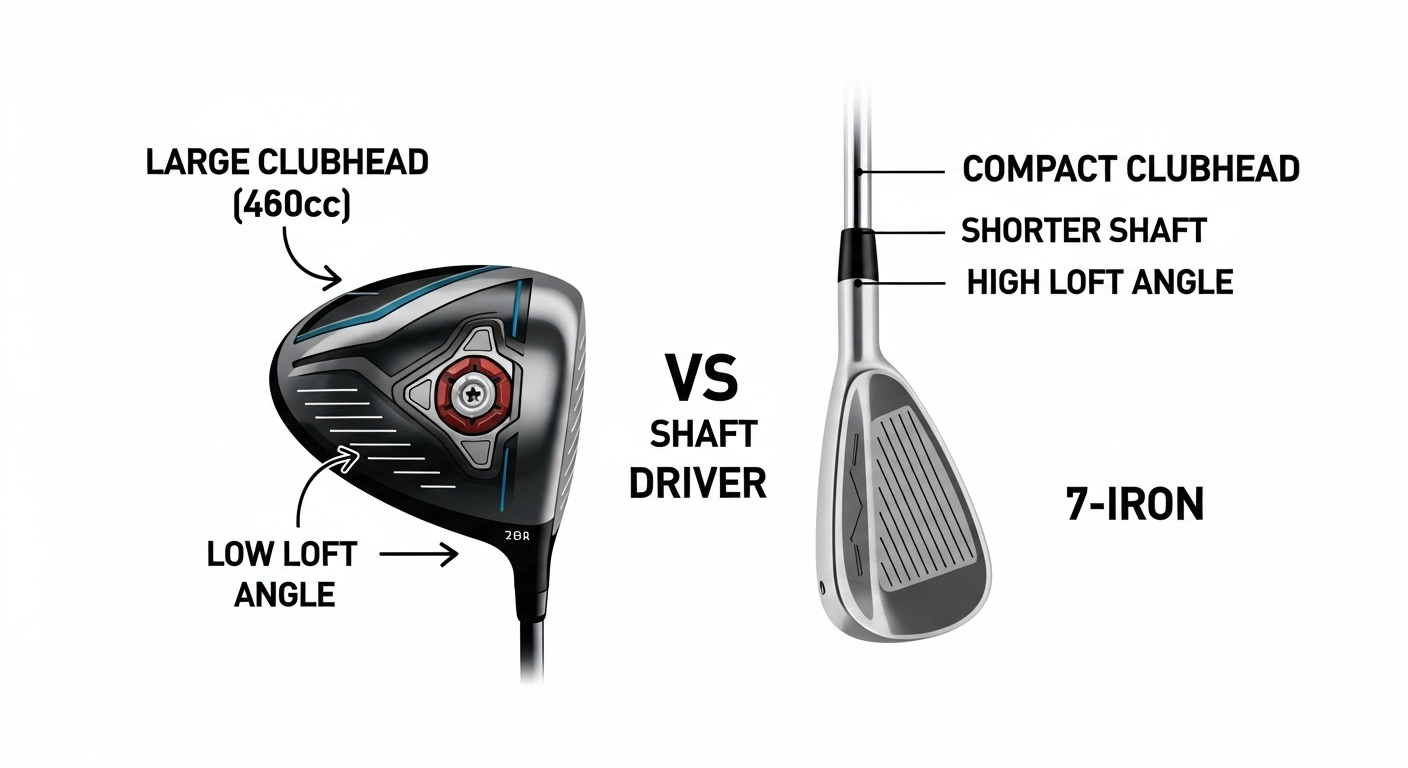
- Driver: The driver has a large, hollow, and often bulbous clubhead. The legal limit set by the USGA (United States Golf Association) is 460 cubic centimeters (cc), and most modern drivers are built right up to that limit. This huge size creates a larger “sweet spot,” making it more forgiving on off-center hits.
- Iron: An iron has a much smaller, solid clubhead forged or cast from steel. The face is flat and grooved, designed to make clean contact with the ball and impart spin. This smaller, blade-like design helps it cut through grass and turf efficiently, which is critical for shots that aren’t sitting perfectly on a tee.
Shaft Length
The length of the shaft is a major factor in how far you can hit the ball.
- Driver: The driver has the longest shaft in your golf bag, typically between 44 and 46 inches, with the maximum legal length being 48 inches. A longer shaft creates a wider swing arc, which translates to higher clubhead speed and, you guessed it, more distance.
- Iron: Iron shafts are progressively shorter. A 3-iron will have a longer shaft than a 5-iron, which is longer than a 7-iron, and so on. In my experience, this is a key design feature for control. A shorter shaft is simply easier to manage and swing consistently, giving you the precision needed for approach shots.
Loft Angle: The Secret to Ball Flight
Loft is one of the most important, yet often misunderstood, aspects of a golf club. Loft is the angle of the clubface in relation to a vertical line. It determines how high and how far the ball will go.
- Driver: Drivers have very low loft, usually ranging from 8 to 12 degrees. This low angle is designed to launch the ball on a lower, more penetrating trajectory with less backspin, allowing it to roll further after it lands. This is perfect for maximizing total distance.
- Irons: Irons have significantly more loft, and the loft increases as the club number gets higher. This is what creates the distance gaps between your clubs.
- A 4-iron might have 22-25 degrees of loft for longer shots.
- A 7-iron typically has 30-34 degrees of loft.
- A 9-iron could have 40-44 degrees of loft for high, soft-landing shots.
- This higher loft launches the ball up into the air and helps it stop quickly on the green.
On the Course: What is the Difference in Using a Driver and an Iron?
Knowing the technical details is great, but how does this apply to your game? Let’s walk through a typical golf hole.
The Tee Box: Starting with Power
On any par 4 or par 5, your goal for the first shot is to get the ball as close to the green as possible. This is the driver’s time to shine.
You will always place the ball on a tee when using a driver. This raises the ball to the center of the large clubface, allowing you to hit it on an upward swing path for optimal launch. A well-struck drive, for me, is the most satisfying feeling in golf and sets you up for an easier next shot. Don’t be afraid to embrace the power of this club!
The Fairway and Beyond: Playing with Precision
Once your ball is in play after your tee shot, the driver goes back in the bag. Now, it’s iron time. Your “approach shot” is your shot into the green.
Let’s say you have 150 yards left to the hole. You’ll consult your distance chart (How to Create a Golf Yardage Chart) and find the iron that you typically hit 150 yards (for many players, this is a 7 or 8-iron). The goal here isn’t to hit it as hard as you can; it’s to hit it the right distance with as much accuracy as possible.
Many beginners struggle with long irons (like a 3 or 4-iron). What I’ve found works best is replacing them with hybrid clubs. Hybrids have a larger head like a wood but are designed to be played like an iron, making them far more forgiving.
If you’re looking for an incredibly easy-to-hit alternative to your long irons, I highly recommend checking out a club like the TaylorMade Stealth 2 Rescue Hybrid. It has helped countless students of mine gain confidence from over 180 yards out.)
Can You Use a Driver from the Fairway?
This is a common question. Technically, yes, but for 99.9% of golfers, especially beginners, the answer is a firm no. The driver’s extremely low loft and large head are designed to hit a ball sitting up on a tee. Trying to hit it directly off the grass is incredibly difficult and usually results in a low, weak shot that skids along the ground. Stick to your irons and hybrids from the fairway.
Pro Tips for Hitting Your Driver and Irons
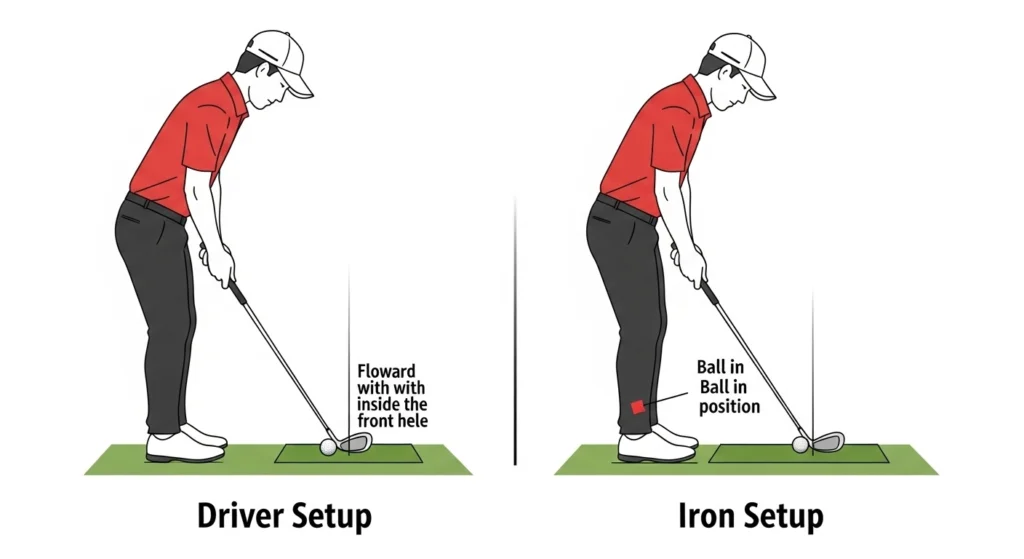
Your swing changes slightly depending on the club you’re using. Perfecting your setup is a huge step towards consistency.
How to Hit a Driver
- Tee It High: A good rule of thumb is to have half of the golf ball above the top of your driver’s clubface when you address it.
- Widen Your Stance: Your feet should be slightly wider than shoulder-width apart to create a stable base for a powerful swing.
- Ball Position Forward: Place the ball in line with the heel of your front foot. This helps you hit the ball on the upswing. This is crucial for getting the launch you need. You can learn more in our complete guide on Proper Golf Stance and Grip for Driving the Ball Straight
How to Hit an Iron
- Narrow Your Stance: Your feet should be about shoulder-width apart.
- Ball Position Centered: For mid-irons (like a 7-iron), the ball should be in the center of your stance. For longer irons, move it slightly forward, and for shorter irons, slightly back.
- Hit Down on the Ball: Unlike a driver, you want to strike the golf ball with a downward blow. The goal is to hit the ball first, and then the turf, creating a small divot in front of where the ball was. This “compresses” the ball against the clubface for a pure, spinning shot.
Frequently Asked Questions (FAQ)
Most golf instructors agree that the 7-iron is the easiest to learn with. It has a good balance of loft and shaft length, making it forgiving and versatile for the practice range.
This varies greatly based on age, fitness, and coordination. A great goal for a beginner male golfer is 180-220 yards, and for a female golfer, 120-160 yards. But remember, accuracy is more important than pure distance when you’re starting out!
While you can play a round without one, the driver is a fundamental club. I’d recommend focusing on your iron swing first to build good fundamentals. However, having a driver is essential for playing longer courses properly. Most beginner sets, like the popular Callaway Strata Complete Set, include a driver and a range of irons, giving you everything you need to start.
Final Thoughts: Mastering Your Club Selection
The difference between a driver and an iron is simple: one is for power, and the other is for precision. The driver is your sledgehammer, used to smash the ball down the fairway from the tee. Your irons are your scalpels, used to carve out accurate shots from the fairway to the green.
Understanding this core concept is a massive step forward in your golf journey. You’ll start to see the course not as one long field, but as a series of strategic shots, each requiring the right tool for the job.
Now that you know the difference, it’s time to put it into practice! What’s the biggest challenge you face with your driver or your irons? Leave a comment below—we’d love to help!