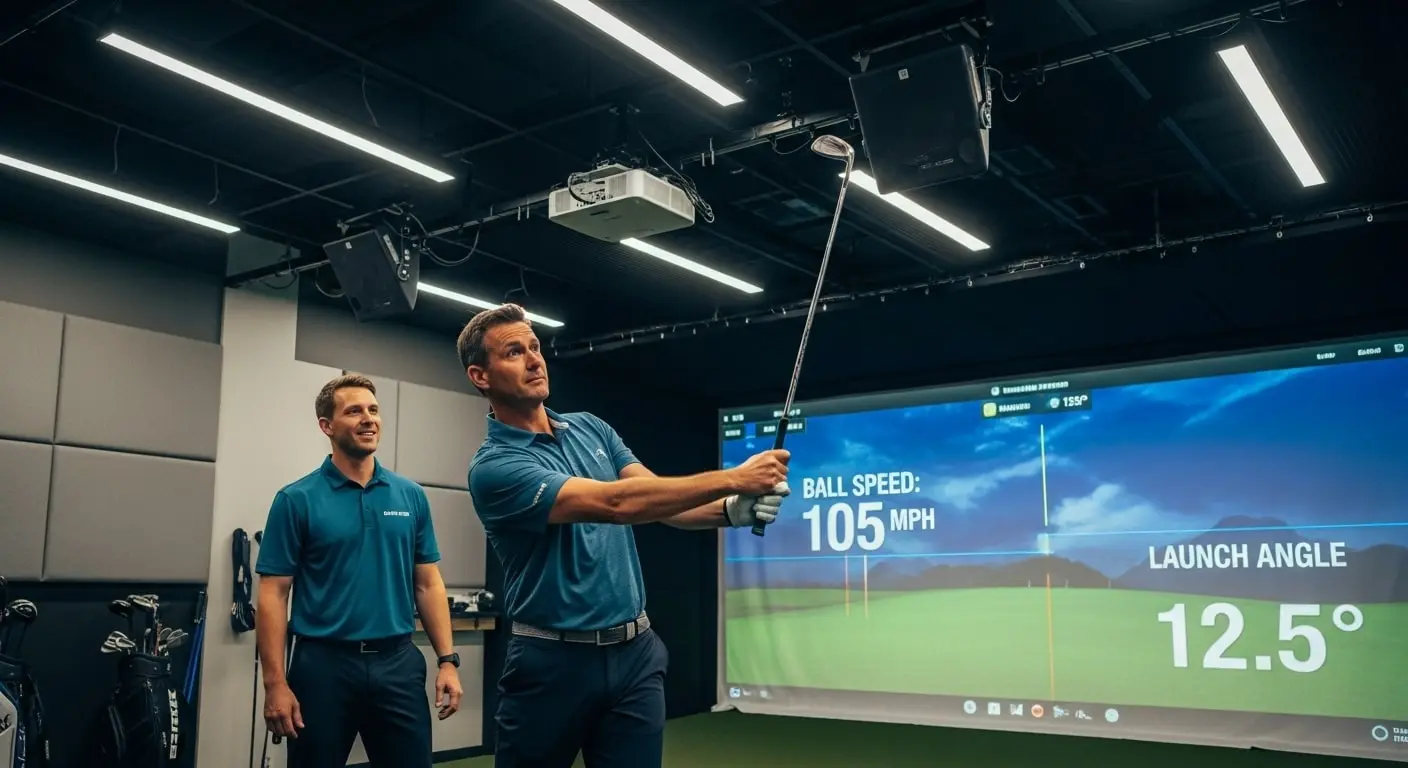
7 Huge Benefits of a Golf Club Fitting for a High Handicapper (It’s Really Worth It)
Let’s be honest. If you’re a high handicapper, you’ve probably had this thought: “I’m not good enough for a golf club fitting. That’s for pros and single-digit players.”
In my experience as a golf writer and avid player, this is the single biggest—and most costly—misconception in the game.
The truth? A high handicapper has more to gain from a professional fitting than almost any other player.
Why? Because you’re likely fighting your equipment on every single swing. You’re trying to learn one of the world’s hardest games with tools that are fundamentally working against you. It’s like trying to learn to type on a keyboard with all the keys in the wrong places.
Getting fitted isn’t a luxury; it’s a shortcut. It’s the fastest way to build consistency, gain confidence, and finally start seeing the scores you know you’re capable of.
This guide will break down the exact benefits of a golf club fitting for a high handicapper and demystify the entire process.
Key Takeaways: Is a Fitting Worth It?
For those in a hurry, here’s the short answer: Yes, 100%. A club fitting for a high handicapper isn’t about tiny tweaks; it’s about massive, game-changing improvements that make golf easier and more fun.
- You’ll Gain Instant Consistency: The right length, weight, and lie angle will naturally guide you to hit the center of the clubface more often.
- It Can “Fix” Your Slice: Many slices are made worse by ill-fitted clubs. The right setup can promote a straighter ball flight immediately.
- You’ll Add Effortless Distance: The correct shaft and clubhead loft will optimize your launch, meaning more carry distance without swinging harder.
- It Builds Confidence: Imagine standing over the ball knowing the club is perfect for you. The mental boost is massive.
- You’ll Save Money: Stop buying off-the-rack clubs “hoping” they’ll work. Get it right once, and those clubs will last you for years as you improve.
What Does “High Handicapper” Even Mean?
Before we dive in, let’s clear this up. A “high handicapper” is generally any golfer who shoots consistently over 95-100 for 18 holes. This typically translates to a handicap index of 20 or higher.
If you’re in this range, you probably struggle with a few common things:
- Inconsistent contact (hitting it fat, thin, or on the toe/heel).
- A persistent slice or a nasty hook.
- A lack of distance, especially with the driver.
- Big gaps in your yardages (e.g., you hit your 7-iron and 8-iron the same distance).
If this sounds familiar, you are the perfect candidate for a fitting.
The Big Myth: “I’m Not Good Enough for a Fitting”
This is the number one objection I hear, and it’s completely backward.
Think of it this way: would you give a brand-new driver a car with a misaligned steering wheel and a sticky gas pedal? Of course not. You’d give them the easiest, safest, most responsive car possible.
Off-the-rack clubs are built for a “standard” golfer who doesn’t exist. They’re often based on a male who is 5’10” and has a specific swing speed.
If you’re taller, shorter, or have a slower (or faster) swing, those clubs are forcing you to make unnatural compensations. You’re developing bad habits just to make the clubs work.
A fitting matches the equipment to your natural swing. It removes the variable of “is it me, or is it the clubs?” This allows you to focus on your technique and build good habits on a solid foundation.
7 Key Benefits of a Golf Club Fitting for a High Handicapper
Let’s get into the specifics. Here is exactly what a custom fitting can do for your game.
1. Instant Consistency and Center-Face Contact
This is the holy grail for high handicappers, and a fitting is the fastest way to get it. Your inconsistency might not just be your swing—it’s likely your clubs.
- Club Length: If your clubs are too long, you’ll hit the heel or stand too tall. Too short, and you’ll stoop over and hit the toe. A fitter nails the perfect length, putting you in a balanced, athletic stance every time.
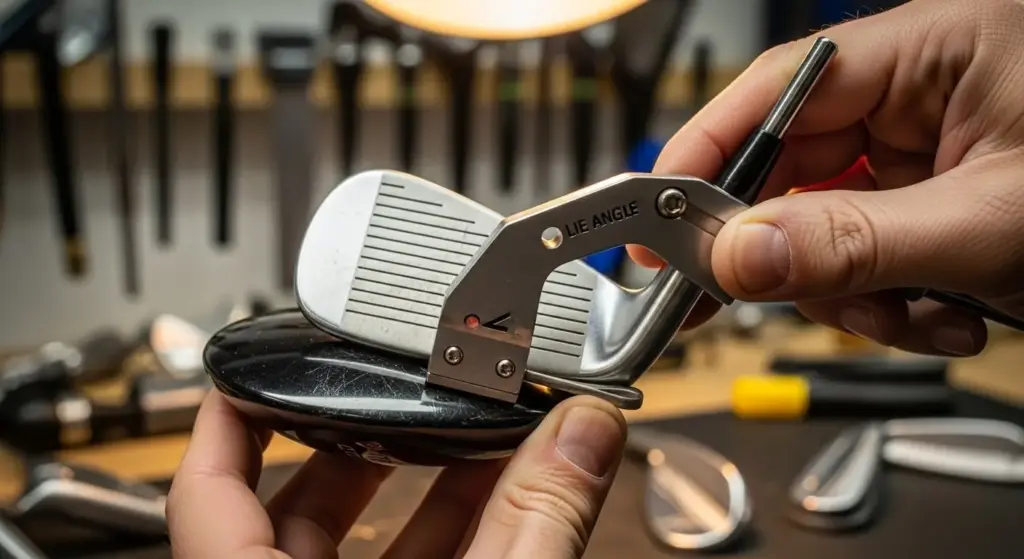
- Lie Angle: This is the angle of the shaft relative to the sole of the club. If it’s too upright, the heel digs, and the ball goes left. Too flat, the toe digs, and the ball goes right. Getting this right is critical for iron accuracy.
In my experience, simply correcting a player’s lie angle can make their “bad” shots 10-15 yards closer to the target.
(Pro Tip: A great way to check your consistency at home is with Golf Impact Tape. It’s a simple sticker that shows you exactly where you’re striking the ball. A fitting helps you get all those marks right in the “sweet spot”.)
2. Fixing Your “Built-In” Slice (or Hook)
That slice you’ve been fighting for years? Your clubs might be 50% of the problem.
For a right-handed player, a club that is too upright (lie angle) will make the ball hook. A club that is too flat will make the ball slice.
Even more important is the shaft. A shaft that is too stiff for your swing speed won’t “kick” at impact, leaving the clubface open and sending the ball spinning to the right. A shaft that is too flexible (which is a common problem for stronger beginners) can cause wild hooks.
A fitter can diagnose this in minutes and put a club in your hands that actively wants to go straight.
3. Gaining “Effortless” Distance and Gapping
Are you swinging out of your shoes just to get the ball “out there”? A fitting finds easy yards.
This is all about launch optimization. A launch monitor measures your “launch angle” and “spin rate.” The goal is to get a high launch with low spin for maximum carry and roll.
- Driver Loft: Most high handicappers use drivers with too little loft (like 9.0°) because they think it’s for “better players.” This robs them of carry. A fitter might find you hit a 10.5° or even a 12° driver 20 yards farther.
- Shaft Kick Point: This determines when the shaft “kicks” to deliver speed. A fitter will match this to your swing’s tempo to optimize your launch conditions.
- Iron Gapping: A fitter will also ensure you have consistent 10-12 yard gaps between each iron, so you’re never “in between” clubs.
4. The Perfect Shaft for Your Swing Speed
The shaft is the engine of the club, and off-the-rack options are extremely limited (usually just “Regular” or “Stiff”).
Your swing speed is unique. If it’s on the slower side (e.g., 75-85 mph with a driver), a “Regular” shaft might still be too stiff. This is like trying to drive a car in 5th gear from a dead stop. You have no power.
A fitter will find the perfect shaft flex, weight, and torque for you. A lighter, more flexible shaft can instantly add 10-15 yards to your drives because it allows the clubhead to “load” and “release” properly.
Understanding your numbers is key. This is why a simple tool like the [PRGR Portable Launch Monitor] can be so insightful, even before you go for a full fitting.
5. Confidence in Every Club in Your Bag
The mental boost from a fitting is priceless.
Imagine this: You’re on a long par-3. You pull out your 5-iron. Instead of thinking, “I hope I hit this right… this club is hard to hit…” you think, “This 5-iron was built for me. It’s the right length, the right lie, and the right shaft. All I have to do is make my normal swing.”
That confidence is the difference between a tense, jerky motion and a smooth, confident swing.
6. Long-Term Cost Savings (Stop Buying Off-the-Rack)
This might sound counter-intuitive since a fitting and custom clubs have an upfront cost. But think about the “hopeful” purchases.
How many off-the-rack drivers, putters, or sets of irons have you bought, used for six months, and then sold on eBay for a loss because they just didn’t work?
A fitting stops that expensive cycle. You buy one set that is correct for you. These clubs will last you for 5-7 years, and they’ll actually help you improve, making them a much better long-term investment.
7. A Professional Baseline for Your Game
Even if you don’t buy new clubs, a fitting provides you with an incredible amount of data about your swing.
You’ll learn:
- Your true clubhead speed.
- Your angle of attack (do you hit down on the ball or “scoop” it?).
- Your club path (are you “over the top”?).
- Your dynamic loft and lie at impact.
This is a blueprint for your game. You can take this data to a golf pro for lessons, and they’ll know exactly what to work on. The fitter and the instructor can work together.
This is especially helpful for understanding what equipment you should be looking for. It might mean a set of game-improvement irons, as we cover in our The Best Game-Improvement Irons for High Handicappers guide.
What Actually Happens at a Golf Club Fitting? (The Process)
If you’re nervous, don’t be. A fitting isn’t a test. It’s a collaborative, no-pressure process to help you.
Here’s the typical flow:
- The Interview (10-15 mins): You’ll talk to the fitter. What are your goals? What’s your miss (slice, hook)? What are your frustrations? Where do you want to be in a year?
- Analyze Your Current Clubs (10-15 mins): You’ll hit some shots with your own clubs. The fitter will use a launch monitor to get a baseline. They’re not judging you; they’re gathering data.
- Test New Heads & Shafts (30-60 mins): This is the fun part. The fitter will start giving you different clubheads and shaft combinations based on your baseline. They’ll say, “Try this one. How does it feel?”
- Find the One (15-20 mins): You’ll quickly narrow it down. You’ll see a clear winner on the launch monitor—one that flies straighter, goes farther, and feels better.
- The Recommendation (10 mins): The fitter will show you the data. “Look, with your old 7-iron, you carried it 130 yards and sliced it 20 yards right. With this new spec, you’re carrying it 145 yards and it’s only 5 yards off-line.” They’ll give you a printout of the specs. There’s usually no pressure to buy on the spot.
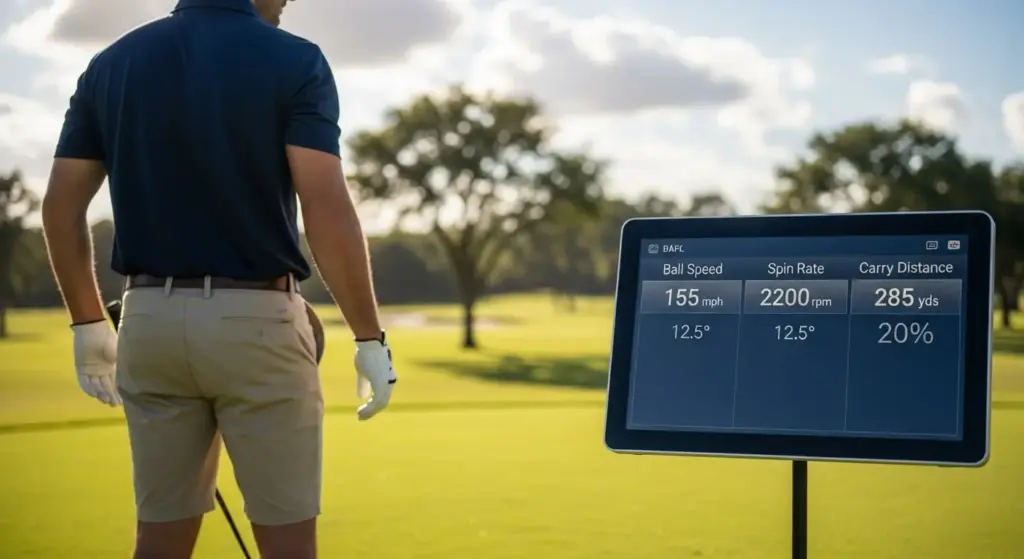
These launch monitors are the same incredible technology validated by golf’s governing bodies, like the USGA (United States Golf Association), to set the standards for the game.
It’s all about finding the right tools for the job, which is a key part of our A Beginner’s Guide to Building a Golf Bag from Scratch.
Frequently Asked Questions (FAQ)
A fitting can range from $50 for a single club (like a driver) to over $300 for a full bag (driver, woods, hybrids, irons, wedges, putter). Many facilities will waive the fitting fee if you purchase the clubs from them.
No. In fact, for a high handicapper, I recommend starting with an iron fitting. Your irons are your “scoring” clubs and where consistency matters most. A driver fitting is a great second step.
Big box stores are often great for a basic fitting (like finding length and shaft flex). An independent, “brand-agnostic” fitter will typically have a wider variety of shafts and heads and will spend more time diving into the data. Both are better than buying off-the-rack.
Plan on about 45-60 minutes for a driver or iron fitting. A full-bag fitting can take 2-3 hours.
Final Verdict: Is a Golf Fitting Worth It for a High Handicapper?
The question isn’t “Am I good enough for a fitting?” The real question is, “How much longer am I willing to play with clubs that are holding me back?”
A golf club fitting for a high handicapper is the single best investment you can make in your game. It’s a direct path to more consistency, better scores, and, most importantly, more fun on the golf course. You’ll finally feel what it’s like when the club is working with you, not against you.
Have you had a club fitting as a high handicapper? What was your biggest takeaway or “a-ha” moment? Drop a comment below and share your experience!