Are Expensive Golf Balls Worth It for a Beginner? The Surprising Truth
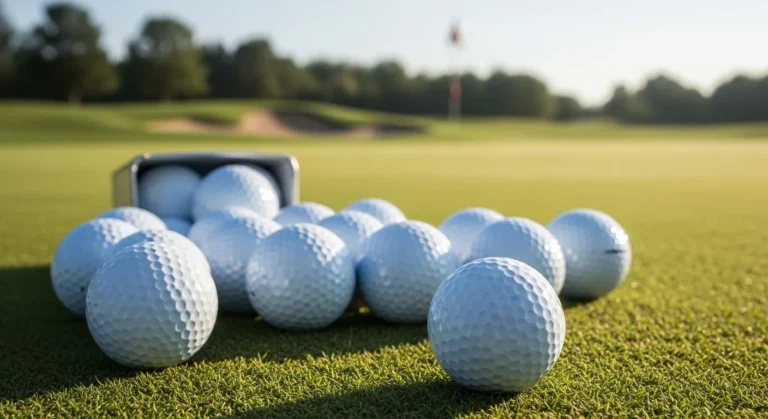
You’re standing in the golf aisle, staring at a wall of golf balls. On one side, you have sleeves of shiny, premium balls with names you’ve seen on TV—Titleist Pro V1, TaylorMade TP5—carrying a price tag that makes you gulp. On the other, you have budget-friendly options that promise great distance for a fraction of the cost.
It’s a classic beginner’s dilemma. Will spending $50+ on a dozen balls magically fix your slice and lower your score? Or are you just buying expensive ammunition to lose in the woods or the water?
In my years on the course, I’ve seen countless new players grapple with this question. They believe the gear makes the golfer, but the truth is a bit more complicated. Let’s cut through the marketing hype and get to the bottom of whether expensive golf balls are really worth it for a beginner.
Key Takeaways for Beginners
In a hurry? Here’s the short answer:
- No, for most beginners, expensive golf balls are not worth the money. Your primary focus should be on developing a consistent swing and making solid contact. The advanced features of a premium ball are often lost on inconsistent swings.
- The biggest factor is your wallet. As a beginner, you will lose a lot of balls. Losing a $4 premium ball stings a lot more than losing a $1.50 value ball.
- Focus on the right type of ball, not the price. Beginners benefit most from low-compression, durable 2-piece balls designed to maximize distance and minimize spin.
What’s the Real Difference Between Cheap and Expensive Golf Balls?
Before we can answer if they’re worth it, we need to understand why one ball costs $5 and another costs $1.50. It’s not just the brand name; it boils down to materials and construction.
Golf Ball Construction Explained
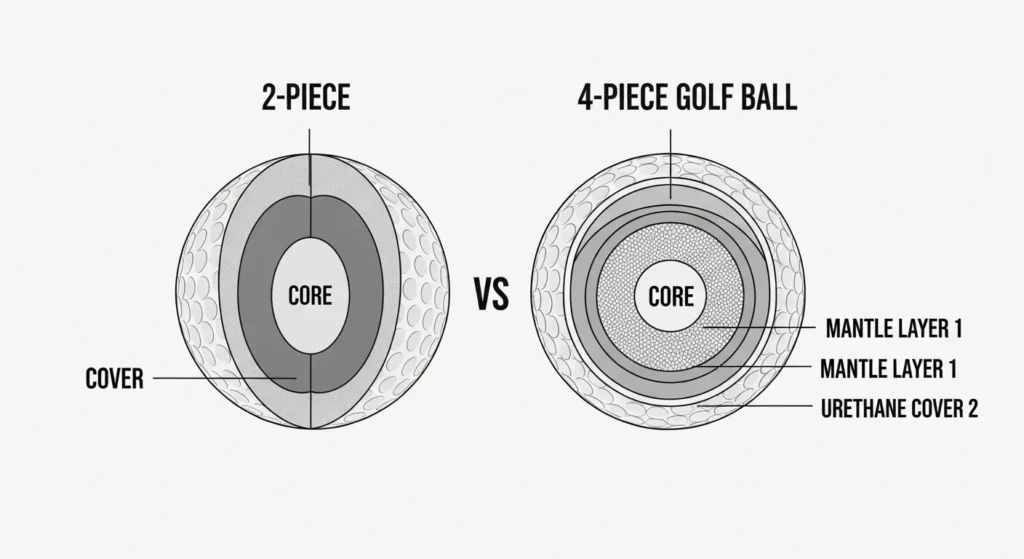
- 2-Piece Balls (Budget-Friendly): This is the most common construction for beginner and high-handicap golf balls. They have a large, solid rubber core and a durable outer cover, usually made of a material called Ionomer or Surlyn. This simple design is built for two things: distance and durability. The firm cover reduces spin, which helps minimize those dreaded slices and hooks.
- 3, 4, or 5-Piece Balls (Premium): These are the expensive golf balls. They feature a multi-layer construction with a core, one or more mantle layers, and a soft urethane cover. This complex design is all about control and feel.
- The soft urethane cover is the magic ingredient. It’s a much softer, stickier material than Surlyn. It allows the grooves on your wedges and short irons to “bite” into the ball, generating significantly more greenside spin for precise chip and pitch shots. In my experience, the difference in spin can be over 1,500 RPM on a well-struck wedge shot.
Are Expensive Golf Balls Really Worth It for a Beginner? The Honest Answer
So, we know premium balls have more advanced technology. But can a beginner actually use that technology? Let’s break down the arguments.
The Argument For “NO”: Why Beginners Should Save Their Money
For 95% of true beginners, the answer is a firm “no.” Here’s why spending less is almost always the smarter play.
1. You Will Lose a Lot of Balls
This is the most practical reason. As a beginner, you’re still learning course management and swing consistency. It’s not uncommon for a new golfer to lose 5-10 balls in a single round.
- The Math: Losing 8 balls at $1.50 each costs you $12.
- The Painful Math: Losing 8 premium balls at $4.50 each costs you $36.
That extra $24 can buy you another two dozen budget balls or a bucket of balls at the driving range. In my opinion, practice is a far better investment for a beginner than premium equipment you can’t yet take full advantage of.
2. You Can’t Maximize a Premium Ball’s Features
A premium ball’s main advantage is greenside spin and control. To generate that high, checking spin, you need two things: a high swing speed and the ability to make a clean, “ball-first” strike.
Most beginners have slower-to-average swing speeds and struggle with inconsistent contact (hitting shots “fat” or “thin”). Without the proper technique, a Pro V1 won’t spin any more on a chip shot than a budget ball. The technology is essentially wasted.
3. Low Spin is Actually Your Friend
The high spin rate of a premium ball is great when you want it (on a wedge), but it’s terrible when you don’t (on a drive). That soft cover that creates so much backspin with a wedge also increases sidespin with a driver. For a player who already slices the ball, a high-spin premium ball can actually make the slice worse.
A firm, low-spin 2-piece ball will help straighten out your ball flight and keep you in the fairway more often. For more detail, check out our guide on Understanding Golf Ball Compression for Your Swing Speed.
The Argument For “YES”: When a Better Ball Might Help
There are a few rare cases where a mid-range or even premium ball might be beneficial for a player who is still relatively new.
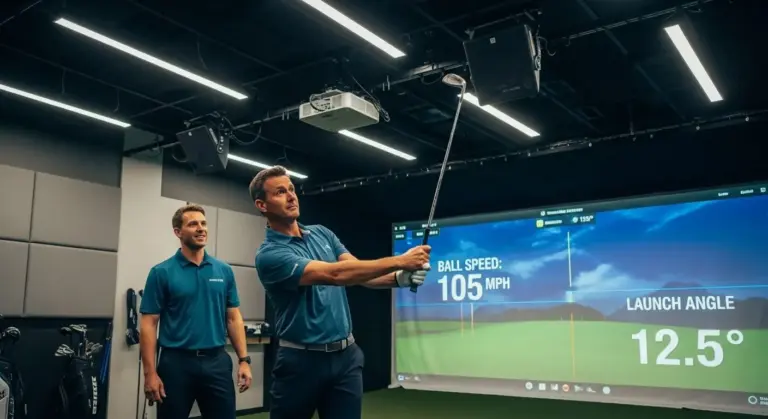
- If you have a naturally high swing speed: If you’re athletic and already generating a lot of clubhead speed (100+ mph with the driver), you might benefit from a slightly more advanced ball that can handle that speed.
- If you rarely lose balls: If you’re a quick learner and already keeping the ball in play, the financial risk is lower.
- If you’re focused on your short game: If your main goal is to improve chipping and putting, practicing with the same type of ball you eventually want to use can help you develop a consistent feel.
Pro Tip: Even in these cases, I’d suggest starting with a “value urethane” ball, which offers a soft cover for a lower price, before jumping straight to the top-shelf options.
What a Beginner Should Actually Look for in a Golf Ball
Okay, so we’re saving our money. What should you be looking for instead? It’s simple: a ball that complements a beginner’s game.
- Low Compression: Compression is a measure of how much a ball deforms at impact. Beginners with slower swing speeds (under 90 mph) benefit from low-compression balls (rated 40-70). They feel softer and are easier to compress, which helps maximize energy transfer for more distance.
- Durable Cover (Surlyn/Ionomer): You’re going to hit trees, cart paths, and rocks. A durable cover will resist scuffs and cuts, meaning your balls will last longer (as long as you can find them!).
- Low Spin Design: Look for balls marketed as “distance” or “straight flight.” These are engineered to reduce sidespin off the driver, helping to tame a slice or hook.
- Price: The sweet spot for a great beginner ball is $20-$30 per dozen. This gets you a quality, consistent product without the financial anxiety. Our guide to the Best Value Golf Balls for High Handicappers has some great recommendations.
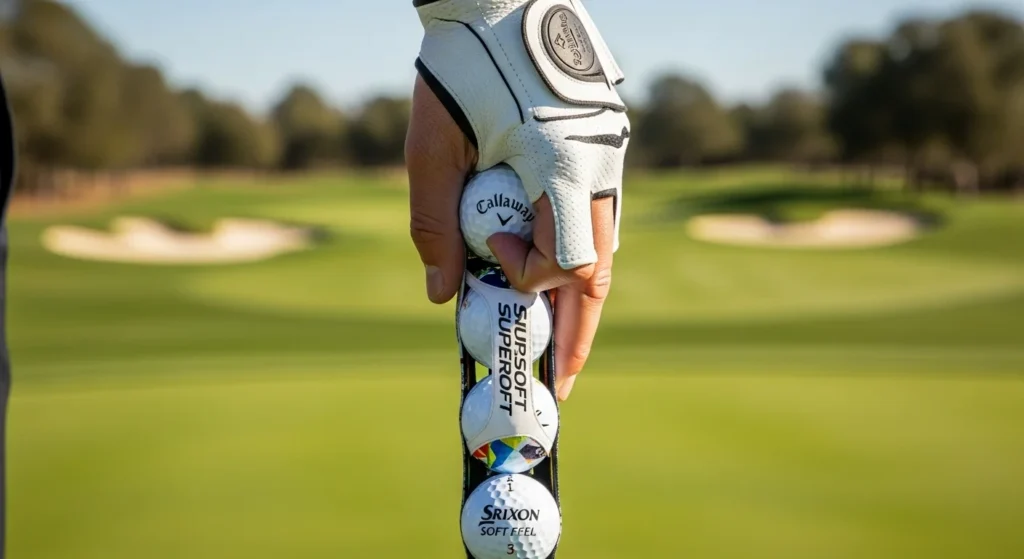
A fantastic and popular choice that fits this description perfectly is the Callaway Supersoft. They are known for their incredibly soft feel, low compression, and straight flight, making them one of the best balls for beginners on the market. Another excellent option is the Srixon Soft Feel.
Frequently Asked Questions (FAQ)
Generally, no. A high handicapper typically has the same inconsistencies as a beginner. The high spin of a Pro V1 can exaggerate slices, and its high price isn’t practical for players who lose balls frequently. There are much better, more affordable options.
This varies wildly, but it’s common for a beginner to lose between 4 and 8 balls per 18 holes, especially on a course with a lot of water hazards or thick woods. Don’t worry, it gets better with practice!
A great price point is between $20 and $30 per dozen. You can find excellent performing 2-piece balls from major brands like Titleist, Callaway, TaylorMade, and Srixon in this range.
For beginners with slower swing speeds, a soft, low-compression ball will generally go farther. This is because they can more easily compress the ball at impact, creating a spring-like effect that maximizes distance. For a deeper dive into this science, the experts at a major golf publication like Golf Digest’s technical articles on ball physics offer some great explanations.
The Final Verdict: Your Best Strategy
So, are expensive golf balls really worth it for a beginner? The verdict is clear: save your money.
Your journey as a new golfer is about building a solid foundation. That means investing your time in lessons and practice, and your money in resources that help you improve—like green fees and range balls.
Here’s my recommended strategy:
- Start with a quality, low-cost 2-piece ball. Buy a few different brands in the $20-30 price range and see which one feels best to you.
- Play with one model consistently. This helps you develop a predictable feel for distance and control, especially around the greens.
- Re-evaluate in 6-12 months. Once your swing becomes more consistent and your handicap starts to drop, you can begin experimenting with a mid-range, 3-piece ball to see if you notice a difference in performance.
Focus on the swing, not the sleeve. The best golf ball for you right now is one that you’re not afraid to lose.
What do you think? Did you start with cheap balls or jump straight to the premium stuff? Share your experience in the comments below!