How to Choose the Right Golf Ball: A Beginner’s Guide
Walking into a golf shop for the first time can feel overwhelming. You see walls lined with dozens of different golf balls, each promising more distance, better spin, and a straighter flight. How do you know where to even start? It’s a question I remember asking myself when I first got serious about the game.
Choosing the right golf ball as a beginner isn’t about finding the most expensive or the one the pros use. It’s about finding a ball that matches your swing speed, feels good off the clubface, and, most importantly, fits your budget. Getting this right can genuinely make the game more enjoyable and even help you shave a few strokes off your score.
In this guide, we’ll break down everything you need to know about how to choose the right golf ball. We’ll skip the confusing jargon and focus on practical advice that will help you make a confident choice.
At a Glance: How to Choose the Right Golf Ball
- Focus on Feel and Budget: As a beginner, the best golf ball is one that feels good and doesn’t break the bank. You will lose balls, so don’t start with premium models.
- Low Compression is Key: Slower swing speeds (under 90 mph) benefit from low-compression golf balls. They feel softer and help maximize distance.
- Cover Material Matters: A Surlyn or ionomer cover is more durable and forgiving than the urethane covers found on premium balls. This means fewer scuffs and a straighter ball flight.
- Two-Piece Balls are Your Friend: These balls are designed for distance and durability, making them the perfect choice for new golfers.
- Consistency is Crucial: Find a ball you like and stick with it. This will help you develop a feel for how the ball behaves around the greens.
Understanding Golf Ball Construction: What Beginners Need to Know
To choose the right golf ball, it helps to understand a little about how they’re made. Modern golf balls have several components, but for beginners, we only need to focus on three: the core, the cover, and the number of layers (or pieces).
The Core: The Engine of the Golf Ball
The core is the very center of the ball and is where all the power comes from. The key term you’ll hear is compression.
- What is Compression? In simple terms, compression is a measure of how much the ball squishes against the clubface at impact. It’s rated on a scale from about 30 to 120.
- Low Compression (30-70): These balls are designed for golfers with slower swing speeds (typically under 90 mph). A softer, low-compression core is easier to compress, which helps generate more ball speed and distance. In my experience, most beginners fall into this category.
- High Compression (80 and above): These are for golfers with very fast swing speeds (100+ mph) who can generate enough force to activate the firmer core. Using a ball that’s too firm will feel like hitting a rock and can actually rob you of distance.
Pro Tip: If you don’t know your swing speed, don’t worry! Start with a low-compression ball. The soft feel is often more pleasant for new players, and it’s the safest bet for maximizing your distance.
The Cover: Durability vs. Spin
The cover is the outer layer of the golf ball. It plays a huge role in feel, durability, and spin. There are two main types of covers you need to know about.
- Surlyn (or Ionomer): This is the most common cover material found on beginner and intermediate golf balls. It’s incredibly durable, so it won’t scuff or cut easily when you hit a tree or a cart path (and let’s be honest, that happens!). Surlyn covers also tend to spin less, which can help reduce hooks and slices, leading to a straighter ball flight. This is exactly what you want when you’re just starting out.
- Urethane: This is a premium material used on Tour-level balls like the Titleist Pro V1. Urethane is much softer and offers incredible spin and control around the greens. The downside? It’s far less durable and significantly more expensive. As a beginner, you won’t be able to take full advantage of the extra spin, so it’s best to save your money.
Two-Piece vs. Multi-Layer Balls
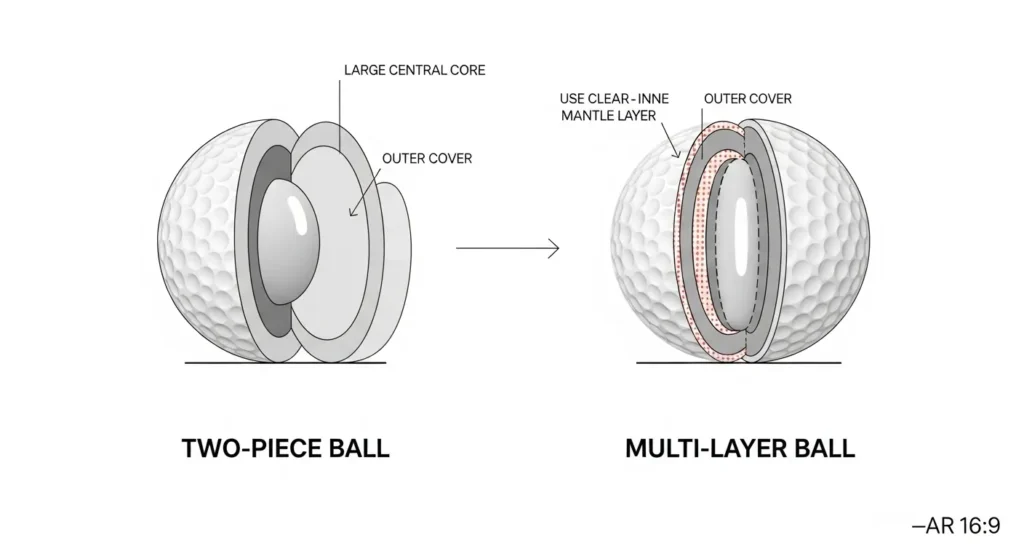
- Two-Piece Balls: These are the simplest construction, with a large core and a cover. They are designed for one primary purpose: to maximize distance and minimize spin. Their durability and lower price point make them the ideal choice for beginners.
- Three, Four, or Five-Piece Balls: These multi-layer balls have additional mantle layers between the core and cover. Each layer is designed to optimize performance in different areas (e.g., driver distance, iron spin, wedge control). While they offer incredible performance for skilled players, they are unnecessary and too expensive for beginners.
How to Choose the Right Golf Ball for Your Game
Now that you understand the basics of construction, let’s put it all together. Here’s a simple, step-by-step process for choosing your first few boxes of golf balls.
Step 1: Be Honest About Your Skill Level (and Budget!)
This is the most important step. As a beginner, you are going to lose golf balls. It’s a rite of passage! There is absolutely no reason to spend $50 on a dozen premium balls when a $20-$25 box will perform better for your game.
In my experience, starting with a lower-priced, durable ball gives you peace of mind. You won’t be as worried about losing a ball in the water or the woods, which allows you to swing more freely and confidently.
A great place to start is with the Callaway Supersoft Golf Balls. They offer excellent feel, low compression for great distance, and are very reasonably priced.
Step 2: Prioritize a Soft Feel and Low Compression
For 99% of beginners, a low-compression ball is the right choice. It will feel softer coming off the club, which is a much more satisfying sensation than the “clicky” feel of a hard, high-compression ball.
This soft feel isn’t just about comfort; it helps you get more feedback on your shots. Over time, you’ll start to notice the difference between a purely struck shot and a mishit.
Step 3: Look for Distance and Forgiveness
As a new golfer, your main goal is to get the ball in the air and moving down the fairway. A two-piece ball with a durable Surlyn cover is engineered to do just that. The low-spin characteristics will help straighten out your slices and hooks, keeping more of your shots in play.If a slice is your main problem, combining the right ball with the right technique is key, which we cover in our guide on How to Fix a Slice for Beginners.
Don’t worry about trying to spin the ball back on the green like the pros. That requires a very specific technique that takes years to develop. For now, focus on a ball that helps you hit it straighter and farther. A forgiving driver is also a big part of this equation, which you can learn about in A Guide on Choosing the Right Golf Driver for Beginners.
Step 4: Buy a Few Different Models to Test
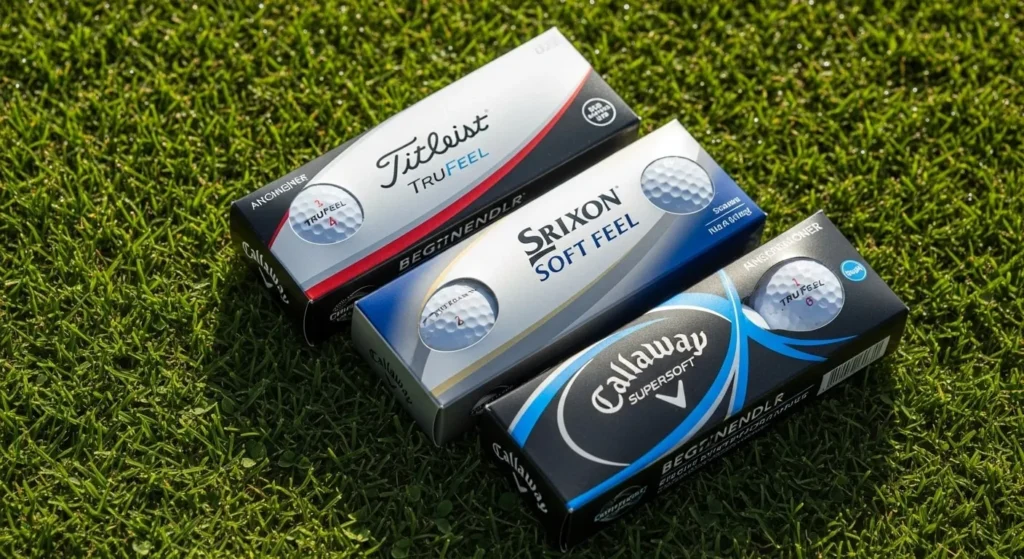
While I have my favorites, the “best” golf ball is ultimately a personal preference. I recommend buying a sleeve (a 3-ball pack) of a few different models that fit the criteria we’ve discussed. Some popular beginner-friendly options include:
- Titleist TruFeel: Known for its ultra-soft feel and great quality.
- Srixon Soft Feel: A classic choice that offers a fantastic balance of distance and feel.
- Callaway Supersoft: Consistently one of the most popular balls for its soft feel and straight flight.
Take them to the practice green to see how they feel when chipping and putting. Then, play a few holes with each and see which one gives you the most confidence. Once you find one you like, stick with it! Using the same ball model every round helps build consistency.
What About Colored Golf Balls?
In recent years, colored golf balls—especially yellow and orange—have become incredibly popular, and for good reason. From my own testing, I’ve found that a matte-finish yellow ball is significantly easier to track in the air against a gray or blue sky. It’s also much easier to spot in the rough.
For beginners, a colored ball can be a huge advantage. It can help you find more of your errant shots, which speeds up play and saves you money. Don’t think of them as a gimmick; they are a genuinely helpful piece of technology.
Frequently Asked Questions (FAQ)
For beginners, expensive golf balls are not worth the money and can even hurt your game. Premium balls are designed for high swing speeds and to generate high spin, which can exaggerate hooks and slices for new players. A cheaper, low-spin ball will almost always produce better results.
If you are a beginner, it is very likely you have a slow-to-moderate swing speed (under 90 mph). You can get your swing speed measured on a launch monitor at a local golf shop, but it’s not necessary at this stage. Simply start with a low-compression ball designed for slower swings.
When you’re starting out, having a forgiving set of clubs is more important than the specific ball you use. However, choosing the right type of ball (low compression, low spin) is a very close second. It’s an easy and affordable way to make the game a little easier.
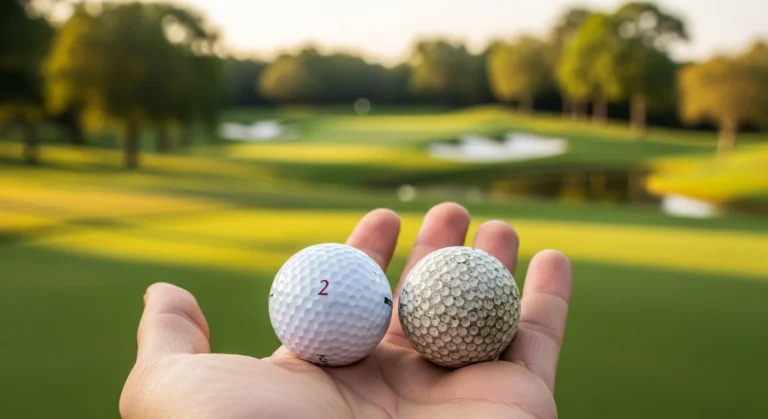
You should replace your golf ball whenever you see a major scuff, cut, or crack in the cover. Minor scratches from normal play are fine, but a deep gouge can affect the ball’s aerodynamics. Of course, for most beginners, the ball will be lost long before it needs to be retired! As a general rule, a single ball can last for several rounds if you don’t lose it. For more information, you can consult a trusted resource like the USGA’s official equipment standards.
Final Thoughts on Choosing the Right Golf Ball
Learning how to choose the right golf ball doesn’t need to be complicated. As a beginner, your focus should be on finding a low-compression, two-piece ball with a durable Surlyn cover. This combination will give you the distance, forgiveness, and soft feel you need to build confidence and enjoy the game.
Avoid the temptation to buy expensive, tour-level balls. Save your money for greens fees and lessons. Once you’ve been playing for a while and your swing becomes more consistent, you can start exploring more advanced options. A Guide on When to Upgrade Your Golf Equipment.
What golf ball did you start with? Do you have a favorite beginner-friendly ball that we missed? Let us know in the comments below!