

15 Basic Golf Etiquette Rules Every New Player Should Know
Welcome to the greatest game in the world! That first walk onto a perfectly manicured course is an exciting moment, but it can be nerve-wracking if you’re unsure about the unwritten rules. The lush green fairways, the perfectly manicured greens, and the challenge of the game itself are captivating. But I get it—it can also be a little intimidating.
Beyond learning how to swing, there’s a whole set of unwritten rules and customs: golf etiquette.
Don’t worry. This guide is your friendly handbook to navigating the course with confidence. In my years of playing and teaching, I’ve seen that understanding these simple rules is the fastest way to feel comfortable and earn the respect of other players. We’ll cover everything from safety to pace of play, ensuring you look and feel like you belong, even on your very first round.
At a Glance: Golf Etiquette for Beginners
For those in a hurry, here are the absolute must-know basics. Internalize these five points, and you’ll be ahead of 90% of other beginners.
- Safety First, Always: Never swing a club until you’re certain others are a safe distance away. Always wait for the group ahead of you to be completely out of range before you hit your shot.
- Keep Up the Pace: The golden rule is to keep up with the group in front of you. Be ready to hit when it’s your turn, and don’t spend more than a few minutes looking for a lost ball.
- Respect the Course: Leave the course better than you found it. This means repairing your divots in the fairway and fixing your ball marks on the green.
- Silence is Golden: Be quiet when another player is preparing for or hitting their shot. This includes talking, rustling through your bag, or driving the golf cart.
- Know Whose Turn It Is: On the tee box, the player with the best score on the previous hole (known as “honors”) hits first. On the fairway and green, the player furthest from the hole plays first.
On-Course Safety: The Most Important Golf Rules
Before we talk about anything else, let’s talk about safety. A golf ball and club are hard objects moving at high speeds. Being mindful of your surroundings isn’t just good etiquette; it’s essential for preventing injuries.
Check Your Surroundings Before You Swing
This is non-negotiable. Before you even take a practice swing, take a full 360-degree look around. Make sure your playing partners, other groups, and any course maintenance staff are well out of your swing path and the potential flight path of your ball. In my experience, this is the single most common safety mistake beginners make.
Wait for the Group Ahead to Be Out of Range
It’s exciting to get to the tee box, but you must wait until the group in front of you has moved completely out of your hitting range. A good rule of thumb is to wait until they are on the green or have driven their carts away from the landing area. Hitting into the group ahead is a serious and dangerous breach of etiquette.
Yell “Fore!” for Any Errant Shot
Even the pros hit bad shots. If you hit a ball that is heading toward another person or another fairway, you have a responsibility to warn them. The universally recognized term is “Fore!” Yell it loudly and immediately. Don’t be shy or embarrassed; protecting others is far more important.
Pace of Play: Basic Golf Etiquette Rules for Keeping Things Moving
“Pace of play” is one of the most talked-about topics in golf. A typical 18-hole round should take about four to four and a half hours for a group of four. Slow play is frustrating for everyone on the course, so learning how to play efficiently is a key part of good etiquette.
Be Ready to Hit When It’s Your Turn
This is the heart of playing at a good pace. True efficiency comes from using the time when others are playing to prepare for your own shot.
Prepare While You Wait
While another player is hitting, you should be preparing. That means:
- Walking to your ball.
- Using a rangefinder or GPS to get your distance.
- Thinking about which club you’ll use. For more on this, check out our guide on What’s in My Bag? 14 Essential Clubs for a Beginner Golfer.
Be Ready to Step Up
By preparing in advance, when it’s your turn, you should be ready to step up, take one or two practice swings, and hit the ball without delay.
Play “Ready Golf”
While the official rule is that the player furthest from the hole hits first, in casual play, it’s common and encouraged to play “ready golf.” This simply means that if you’re ready to hit and it’s safe to do so, you can go ahead, even if you aren’t technically the furthest away. This keeps the game moving smoothly.
Limit Your Search for a Lost Ball
The official rules of golf give you three minutes to search for a lost ball. In my opinion, for a beginner, that’s plenty of time. If you can’t find it quickly, declare it lost, take your penalty, and move on. Constantly searching for balls is a major cause of slow play. Using a brightly colored ball can help, and you can learn more in our A Guide on Choosing the Right Golf Balls for Beginners.
Place Your Bag or Park Your Cart Strategically
This is a pro tip that makes a huge difference. When you approach the green, don’t leave your bag or park your cart in front of the green. Instead, place it on the side of the green that is on the way to the next tee box. This way, once you’re done putting, you can quickly grab your gear and move on without backtracking.
Respecting the Course: How to Be a Good Steward
A beautiful golf course is the result of hard work by the groundskeeping crew. As players, it’s our job to help maintain its condition. Following these basic golf etiquette rules shows respect for the course and for the players who will come after you.
Repair Your Divots
When you hit a shot from the fairway, your club will often take a slice of turf, called a “divot.” You must repair it.
- If the divot is intact: Simply pick it up, place it back in the hole like a puzzle piece, and press down firmly with your foot.
- If the divot explodes: Many courses provide a sand-and-seed mixture in a bottle on the golf cart. Use this to fill the hole until it’s level with the ground.
Fix Your Ball Marks on the Green
When your ball lands on the soft putting green, it will create a small crater called a “ball mark” or “pitch mark.” Fixing them is one of the most important ways you can care for the course.
The Correct Repair Technique
Fixing a ball mark properly is easy once you know how:
- Take a divot repair tool (every golfer should have one).
- Insert the prongs into the turf around the edge of the mark.
- Gently push the turf toward the center of the mark. Do not lift up, as this tears the roots.
- Work your way around the mark, pushing the edges inward.
- Once the hole is closed, gently tap the area with your putter to smooth it out.
Why It’s So Important
An unrepaired ball mark can damage the green for weeks and affect the roll of other players’ putts. A properly repaired mark, however, can heal in just a day or two. A simple, sturdy divot tool is a must-have. Something like the Callaway Divot Tool is a fantastic and affordable choice for any beginner.

Rake the Bunkers
If your shot lands in a sand bunker, you must rake it smooth after you’ve hit your ball. The goal is to leave the bunker in perfect condition for the next player. Enter and exit the bunker from the lowest point to avoid breaking down the steep edges. After your shot, find the rake, smooth over your footprints and the mark left by your club, and place the rake back outside the bunker.
On the Green: Special Etiquette for the Putting Surface
The putting green is where games are won and lost, and it has its own unique set of etiquette rules. This is where focus is most intense, so being respectful is key.
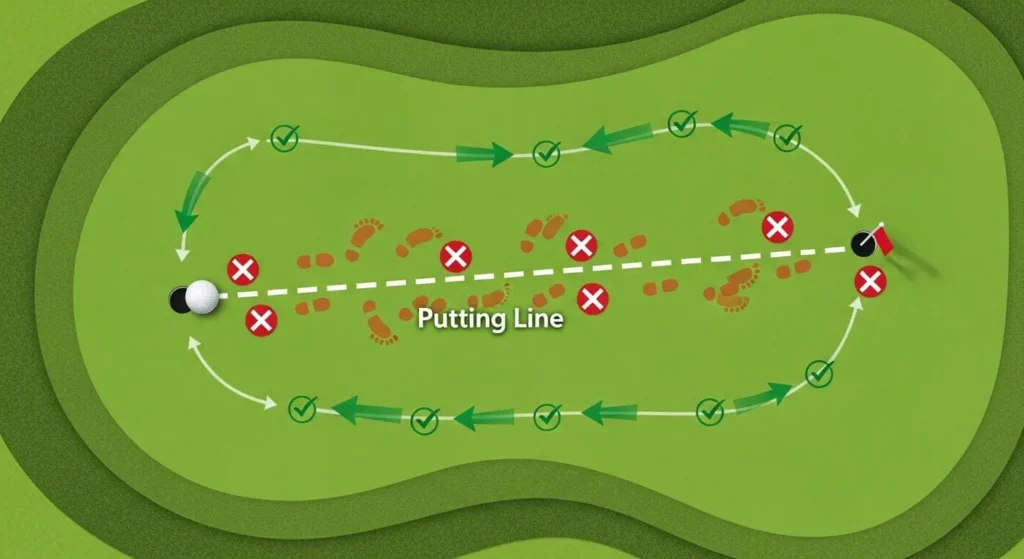
Don’t Step in a Player’s Putting Line
A player’s “line” is the imaginary path the ball will take from their ball to the hole. Walking across this line can create small footprints or indentations that could knock a putt offline. Be mindful and walk around other players’ lines, never over them.
Mind Your Shadow
On a sunny day, be aware of where your shadow is falling. If your shadow is cast over another player’s ball or their putting line while they are trying to putt, it can be very distracting. Try to stand in a position where your shadow doesn’t interfere.
Tend or Remove the Flagstick
The flagstick (or “pin”) can be either removed from the hole or “tended” (held by a player and removed as the ball approaches). If you are the first player to finish putting, it’s your job to put the flagstick back in the hole once everyone in your group has finished.
General Courtesy: The Unspoken Rules of Golf
Finally, here are a few general rules of courtesy that apply throughout your round.
Dress the Part
Most golf courses have a dress code. While it varies, a good general rule for men and women is a collared shirt (like a polo), and slacks, shorts, or a skirt. Denim, cargo shorts, t-shirts, and athletic wear are usually not allowed. Proper golf shoes (with soft spikes) are also a good idea. When in doubt, call the course ahead of time and ask.

Be a Good Sport
Golf is a game of integrity. Don’t talk during another player’s swing, don’t make sudden noises, and don’t offer unsolicited swing advice unless asked. Compliment good shots, offer encouragement after bad ones, and above all, have fun. A positive attitude is the best piece of equipment you can bring to the course. For more on the official rules, the USGA’s section on player conduct is a great resource.
Frequently Asked Questions About Golf Etiquette
While all are important, the two most critical are safety and pace of play. Always be aware of your surroundings to ensure no one gets hurt. And by playing efficiently and keeping up with the group in front of you, you show respect for every other golfer on the course.
You can’t go wrong with a collared polo shirt and a pair of khaki shorts or pants (for men) or a golf skirt/shorts (for women). Avoid jeans, sweatpants, and t-shirts. If you don’t have golf shoes, a comfortable pair of sneakers will usually be fine for your first time at a public course.
Absolutely! Golf is a social game. However, the key is knowing when to be quiet. Once a player starts to address their ball and begin their pre-shot routine, all conversation should stop until after they have hit their shot.
It’s best to keep your phone on silent and in your bag. Taking calls or listening to music without headphones is a major distraction and generally frowned upon. Using a golf GPS app is fine, but do so quickly and quietly.
Wrapping It Up: Your First Round Awaits!
There you have it—a complete guide to the basic golf etiquette rules that every new player should know. It might seem like a lot, but most of it boils down to common sense and respect: respect for your fellow players, respect for the golf course, and respect for the game itself.
Don’t strive for perfection on your first day. Just being aware of these rules will put you on the right track. Focus on safety, keep a good pace, fix your marks, and you’ll have a fantastic time.
Now get out there and enjoy your round!
What’s the one golf etiquette rule you wish you knew when you first started playing? Share your story or any questions you have in the comments below!